Address
304 North Cardinal
St. Dorchester Center, MA 02124
Work Hours
Monday to Friday: 7AM - 7PM
Weekend: 10AM - 5PM
Address
304 North Cardinal
St. Dorchester Center, MA 02124
Work Hours
Monday to Friday: 7AM - 7PM
Weekend: 10AM - 5PM
Custom Figure Factory
Custom Figure Factory
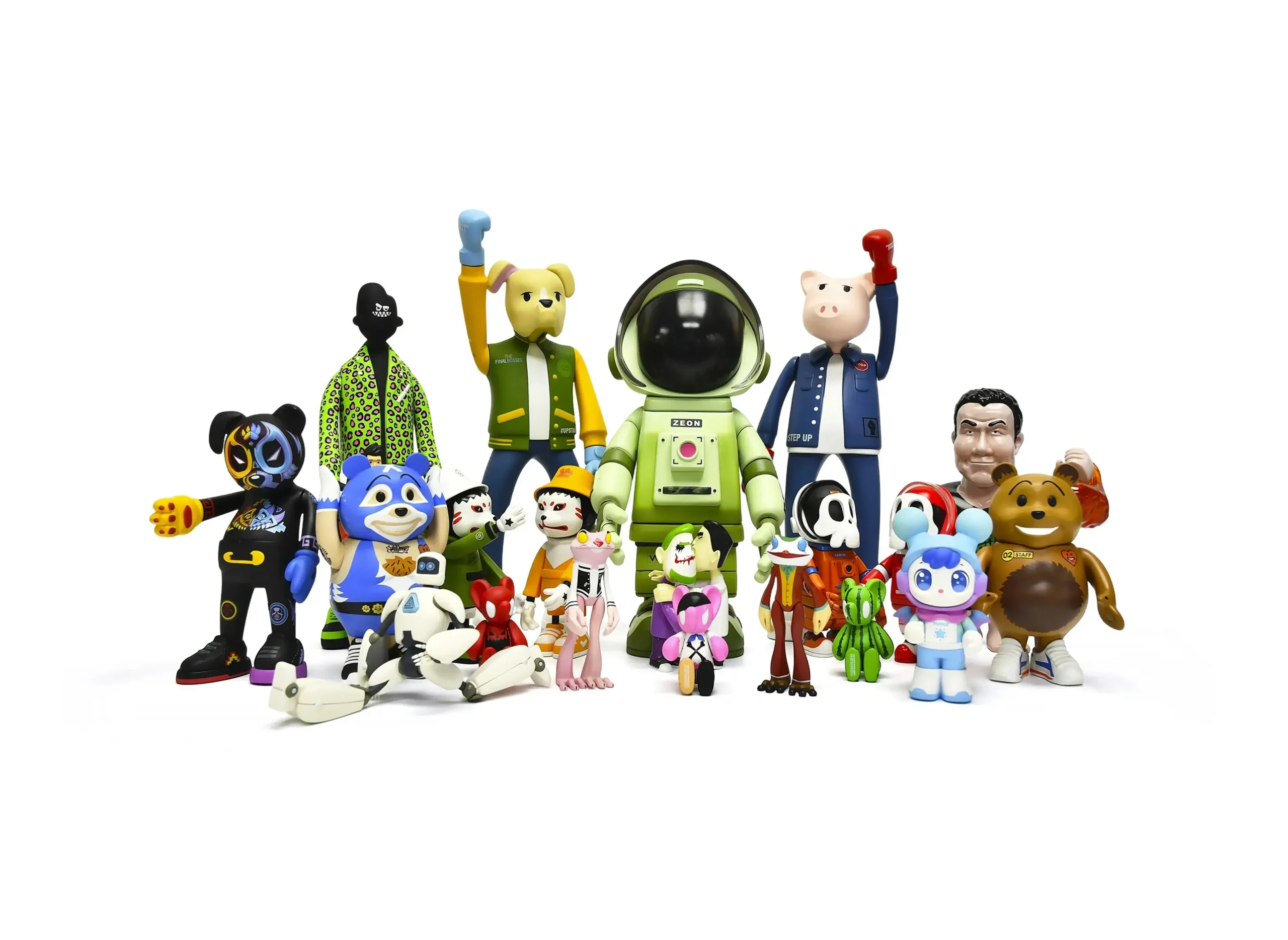
If you are an artist, designer or collector in the art toy space, you have likely noticed a frustrating mismatch: most designer vinyl toys carry a “14+” age label, yet they are still required to comply with safety standards originally written for children’s playthings. It is similar to forcing adult sneakers to pass the same safety tests made for toddler footwear — technically achievable, yet poorly matched to the product’s real use case.
This sector has expanded at breakneck speed. China’s art toy market alone surpassed $12 billion in 2025, with an annual CAGR above 28%, and is projected to hit $15 billion in 2026. Regulatory standards, however, have failed to keep up. The majority of collectible art toys currently fall back on standards developed for model kits or conventional children’s toys — neither of which fully addresses their unique materials, production processes and collector-focused usage.
This landscape is now changing rapidly. Below is a practical guide covering the three core global markets: applicable standards, side-by-side comparisons, certification workflows and our most frequently asked compliance questions.
| Market | Regulatory Framework | Key Standard | Mandatory Certification | Age Scope |
|---|---|---|---|---|
| United States | CPSIA (2008) | ASTM F963 (codified at 16 CFR Part 1250) | CPC (Children’s Product Certificate) | Mandatory testing for ages 12 & under; 14+ items may still fall under the standard |
| European Union | Toy Safety Regulation (EU) 2025/2509 (in force Jan 1, 2026; full application Aug 1, 2030) | EN 71 series (harmonised standards) | CE marking + Digital Product Passport (DPP) | 14 & under |
| China | GB 6675 series (2025 revision, enforceable Nov 1, 2026) | GB 6675.1–4 | CCC for in-scope products | 14 & under (traditional toys) |
| China (Art Toys) | New national standard in development | General Technical Requirements for Trendy Figures and Similar Products | To be confirmed (draft stage) | 14+ (collector / adult audience) |
| United Kingdom | Toys (Safety) Regulations 2011 (retained EU rules) | EN 71 (harmonised) | UKCA or CE marking | 14 & under |
| Canada | CCPSA (Canada Consumer Product Safety Act) | SOR/2011-17 Toy Regulations | SOR certification | Determined by product type |
There is no single global toy certification. Every destination market enforces its own mandatory regime. The three frameworks share baseline requirements for small parts, sharp edges and heavy metal limits, but diverge significantly on detailed rules.
| Comparison Dimension | China (GB 6675) | European Union (EN 71) | United States (ASTM F963) |
|---|---|---|---|
| Regulatory Status | Mandatory national standard | Directive + harmonised standards | Mandatory federal regulation |
| Chemical Scope | Moderate baseline; 8 migratable heavy metals | Broadest coverage; 19 heavy metals | Focused on high-risk substances |
| Compliance Mark | No universal mark; CCC for covered products | CE marking | CPC certificate |
| Documentation | CCC certificate (where applicable) | EU Declaration of Conformity + DPP (effective 2030) | Children’s Product Certificate (CPC) |
| Core Chemical Limits | 8 migratable elements | 19 elements including Al, Sb, As, Ba, B, Cd, Cr(III/VI), Co, Cu, Pb, Mn, Hg, Ni, Se, Sr, Sn, organotin, Zn | Total lead: coating ≤90 ppm, substrate ≤100 ppm |
| Physical Rules | Small parts, sharp edges, tension ≥50N | Ropes over 22cm require tension testing; projectile kinetic energy ≤0.08J | Aligned with ASTM mechanical test protocols |
| Latest Update | GB 6675-2025 (enforceable Nov 1, 2026) | EN 71-1:2026 (published Jan 28, 2026) | ASTM F963-23 (effective April 20, 2024) |
GB 6675-2025 now sets some of the strictest chemical rules globally. The 2025 update adds controls for N-nitrosamines, formaldehyde, azo dyes, PAHs, formamide, SCCPs, VOC/TVOC emissions and allergenic fragrances, plus boron limits for modelling compounds. Its VOC requirements are notably more comprehensive and stringent than those in the US and EU.
The EU is in a transition phase. Directive 2009/48/EC paired with EN 71-1/-2/-3 remains the foundation for CE marking today. The new Toy Safety Regulation (EU) 2025/2509 will take full effect on August 1, 2030 and introduce the Digital Product Passport for all toys.
The US system leans heavily on third-party testing. ASTM F963-23 applies to toys manufactured from April 20, 2024 onward. Toys intended for children aged 12 and under need testing at a CPSC-accepted lab plus a CPC. The CPSC also rolled out new rules for water beads, effective March 12, 2026.
For toys targeted at children aged 12 and under:
Timeline reference: Testing usually takes 7–10 working days; CPC can be issued immediately once tests pass. Full test costs range from $400 to over $2,000 depending on product complexity.
Current workflow (until 2030)
New workflow under (EU) 2025/2509 (from 2030 onward) The traditional EU DoC will be replaced by the Digital Product Passport (DPP). Every toy will carry a unique digital identifier (usually a QR code), granting public access to compliance data. DPP content includes CE marking, safety warnings, batch information, material composition, conformity reports and recall history. For online sales, buyers must access the DPP link before checkout.
Timeline reference: Full EN 71 (Parts 1–2–3) testing costs roughly $400–$850, turnaround 7–10 working days. Add EN 62115 for electronic toys: $700–$1,100, 2–3 weeks. EN 71-1:2026 must be adopted as a CEN national standard by July 31, 2026.
For 14+ art toys: The new national standard General Technical Requirements for Trendy Figures and Similar Products is still under development, expected to finalise around July–August 2026. Until release, most brands reference GB/T 26701-2011 (model products) or group standards including T/CPQS C010-2022.
Q: My product is labelled “14+”. Do I still need to follow children’s toy standards?
A: It depends on your sales market. In the US, CPSC judges by function, appearance, sales channel and target audience — not only the age label. A colourful blind box may be collected by adults, yet regulators can argue it also appeals to younger children. If that determination is made, full CPC compliance becomes mandatory. In the EU, the new regulation clarifies that a product counts as a toy when a reasonable caregiver would perceive it as intended for children under 14 based on its function, size and features, regardless of printed labelling. In China, the upcoming dedicated art toy standard is written specifically for 14+ collectibles, but until it is published, many products are still assessed against children’s toy criteria.
Q: What is the Digital Product Passport and when will it be required?
A: The DPP is a QR code or digital carrier on toys sold in the EU, linking to full compliance records: CE information, safety warnings, batch data, material composition, test reports and recall logs. The Toy Safety Regulation (EU) 2025/2509 entered into force on Jan 1, 2026, with full enforcement starting August 1, 2030. You have a transition window, but early preparation is strongly advised.
Q: What is the difference between CPC and CE certification?
A: CPC is a US requirement: a self-declaration document issued by manufacturers or importers backed by testing at a CPSC-accepted lab. CE marking is the EU’s conformity declaration, confirming the product meets EU health, safety and environmental rules. They are not interchangeable; sellers entering both markets need both.
Q: Which chemical limits are the strictest?
A: The EU has the broadest chemical checklist: 19 heavy metals under EN 71-3 plus extensive organic compound restrictions. China’s new GB 6675-2025 introduces unique controls over VOC/TVOC, formaldehyde, azo dyes, PAHs and allergenic fragrances that the other two regimes do not mandate. The US focuses heavily on total lead (coating ≤90 ppm, substrate ≤100 ppm) and eight restricted phthalates (each ≤0.1%). For specific substances such as decabromodiphenyl ether (decaBDE), the EU sets the tighter cap (≤0.001% for non-electric toys) versus the US limit of ≤0.1%.
Q: Do I need to test every production batch?
A: In the US, the CPC ties to individual production batches and you must retain test records. Many manufacturers run full tests on initial runs and carry out periodic batch verification, though the legal obligation applies per batch. In the EU, the Declaration of Conformity covers the product design; ongoing compliance remains the manufacturer’s responsibility. Under the upcoming DPP system, batch-level traceability will be significantly strengthened.
Q: My art toy has a battery-powered light base. Are there extra rules?
A: Yes. Under the new EU TSR, batteries must be secured so they cannot be accessed without tools. Where product size or design makes this impractical, rechargeable batteries may be sealed as non-removable units, replaceable only by professionals. In the US, electric toys must additionally satisfy electrical safety requirements under 16 CFR Part 1505.
Q: What about VOCs, volatile organic compounds?
A: VOCs are rapidly becoming a high-priority compliance item. China’s GB 6675-2025 lays out explicit, demanding VOC/TVOC emission requirements beyond those in the US and EU. This matters greatly for art toys, which commonly use paints, adhesives and clear coatings. The new Chinese art toy standard is expected to adopt VOC limits based on existing group standard T/CPQS C011-2023.
Q: How do I select a suitable testing lab?
A: For the US, confirm the lab holds CPSC acceptance. For the EU, choose ISO 17025 accredited labs. For China, work with locally accredited testing institutions. A practical rule: specify your target market, applicable standard, product type and required report. Avoid asking if a supplier is “internationally certified”; always request the exact test documentation.
If you are a designer or artist: Material selection carries heavier compliance risk than ever. Paints, plastics and adhesives are the main sources of chemical hazards. VOC controls are arriving (China’s new standard includes a dedicated section), while US and EU rules already restrict lead, phthalates and heavy metals. Ask suppliers for MSDS and valid test reports — do not rely on verbal confirmation.
If you are a collector: These updated standards bring greater transparency. The EU Digital Product Passport lets you scan a QR code to view a figure’s material makeup, safety certificates and recall history — a level of visibility collectors have never had before.
If you manufacture or sell art toys: Do not treat a “14+” label as a compliance shield. Global regulators adopt function-first definitions: if an item presents like a toy, it may be regulated as one. Test early and test repeatedly, and engage labs qualified for each target market. The EU DPP infrastructure is still under construction, but technical specifications are already published. Waiting until 2029 to prepare carries substantial risk.
Toy safety frameworks are being rewritten simultaneously in Washington, Brussels and Beijing. At Xingyi Toy, we track every regulatory update closely — not for bureaucracy’s sake, but because we have seen countless well-crafted designs held at customs due to missing or non-compliant test paperwork. Great art deserves to travel the world, and safe art travels further.
