Address
304 North Cardinal
St. Dorchester Center, MA 02124
Work Hours
Monday to Friday: 7AM - 7PM
Weekend: 10AM - 5PM
Address
304 North Cardinal
St. Dorchester Center, MA 02124
Work Hours
Monday to Friday: 7AM - 7PM
Weekend: 10AM - 5PM
Custom Figure Factory
Custom Figure Factory
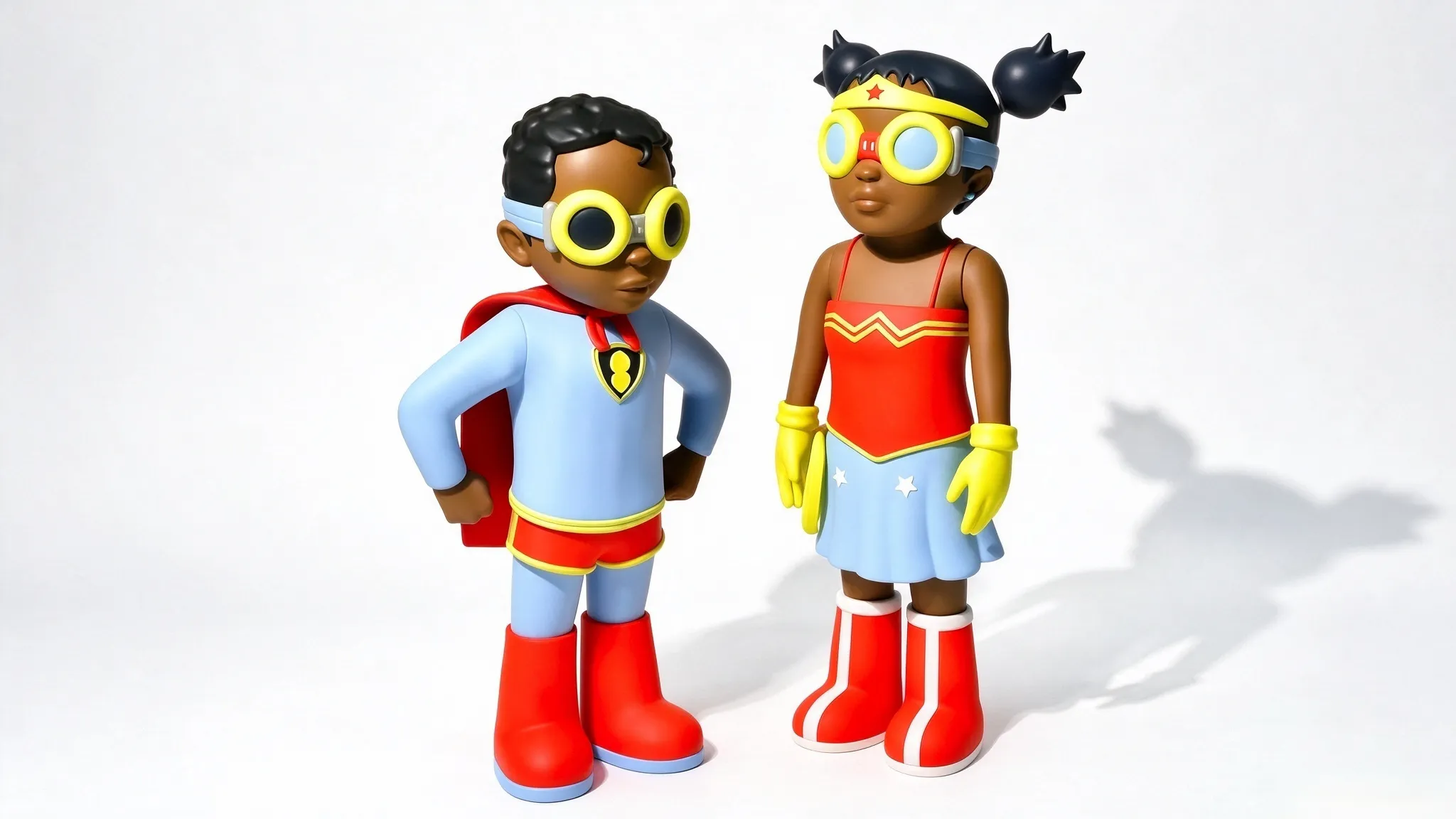
There’s an unwritten rule in this industry: when you inquire about custom vinyl figures, eight out of ten factories set their MOQ at 500 pieces, and some go straight to 3,000. The reasoning is straightforward. Cutting a full iron mold set, splitting the sculpt for molding, producing samples, calibrating spray jigs and pad-print plates — all of these steps require roughly the same amount of work for 50 pieces as they do for 500. Small runs are not profitable, so factories enforce high minimums and turn away small and mid-sized buyers.
Xingyi Toy brings our OEM minimum down to 50 pieces not because our labor and mold costs are cheaper than everyone else’s. We simply accept orders that do not turn an immediate profit. A 50-piece order still goes through the full workflow: 3D modeling, mold parting, red-wax prototyping, iron mold fabrication, pre-production sampling, spray painting, pad printing, assembly and quality control. No steps are skipped. You retain full ownership of your IP, meaning no other party can apply their logo to your design for resale.
The tradeoff is clear: the unit price will be higher than for runs of 500 or 1,000 pieces. Fixed mold costs spread across only dozens of units push the per-piece cost up noticeably. This model lets you avoid tying up capital in thousands of stock units. You can produce a small batch, bring it to conventions, launch a crowdfunding campaign, test market response, and reorder if the product sells well. Reorders cover only production and packaging; you never pay the mold fee a second time. Pre-production samples are complimentary for bulk orders — you only cover shipping fees. Mass production kicks off only after you approve the sample.
Our 50-piece MOQ is no marketing gimmick. It gives independent artists and small brands a way to get their product made, before committing to large-scale stock.
Most factories set high MOQs for custom vinyl figures at 500, 1,000 or even 3,000 pieces out of practical economics, not stubbornness. Vinyl manufacturing has one core characteristic: heavy fixed costs that barely change with order volume. A full iron mold set costs $200–$500. Mold parting, red-wax masters, prototyping, pre-production samples, spray jig setup and pad plate layout all take the same time, labor and materials whether you make 50 units or 500. For a 50-piece order, that mold cost can add $4–$10 to each unit. Spread over 500 pieces, it drops to $0.40–$1 per unit. That is the core price gap. Factories are not charitable operations. Small runs force higher unit pricing just to break even. When buyers see those high per-unit prices, they hesitate. Factories therefore set higher MOQs so tooling and sampling costs get diluted, resulting in a unit price that buyers find reasonable.
The second factor is line changeover cost. Vinyl curing ovens, spray lines, pad printers and assembly stations are calibrated for one design at a time. Switching to a new design means downtime, material purging, re-calibration and color matching. A 50-piece batch can finish before the production line is fully settled. Changeover time can exceed actual production time. At 500 or 1,000 pieces, the same settings run continuously, and that is where production efficiency comes from. Factories aim to keep lines fully occupied and maximize hourly output. Small orders tie up equipment with limited output.
Third comes skilled labor. Vinyl flash edges need hand trimming and sanding. Overspray is touched up manually. Eyes and logos are applied through repeated pad-print passes. Assembly requires seam handling and heat-forming mushroom pegs. These tasks are consistent and efficient only with experienced workers. Training staff for paint touch-up and assembly takes time. Small orders split skilled labor across frequent changeovers, dragging down productivity and raising management overhead. Large orders let the same team repeat the same workflow continuously, stabilizing workmanship and yield rates.
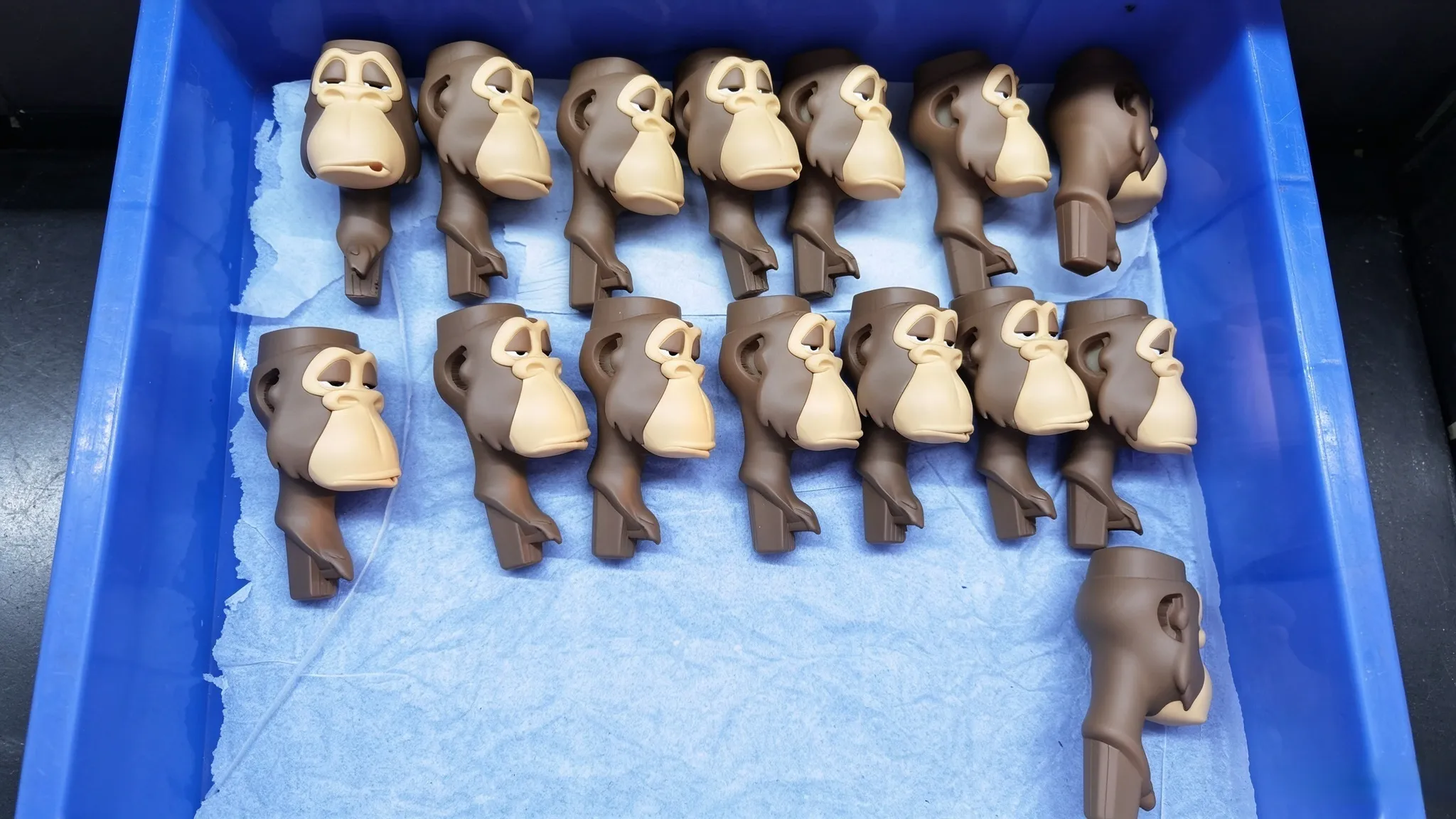
Fourth is quality risk and rework expense. When issues arise on a small run — incorrect color, poor assembly fit, multiple sample revisions — communication, rework and remake costs can easily outstrip the order’s profit margin. A higher MOQ ensures each order carries enough margin to absorb this uncertainty. There are also minimum order rules for raw materials and packaging. Carton printers will not set up production for just 50 boxes. Caught in the middle, factories have no choice but to raise entry minimums.
Client base structure also plays a role. Most factories primarily serve distributors, traders and established IP holders placing orders in thousands or tens of thousands. There is little incentive to restructure production scheduling to accommodate a small number of small clients. Over time, 500 or 1,000 pieces became standard industry practice — not an official rule, but the natural outcome of everyone’s cost calculations.
Xingyi Toy’s 50-piece OEM minimum does not eliminate these inherent costs. We choose to take on these low-margin orders, supported by 12 years of experience serving over 2,000 brands and a stable team of veteran craftspeople. We optimize scheduling, changeover workflows, sampling and touch-up processes to make small batches viable. We do not hide the tradeoff: unit pricing for 50 pieces is higher than for 500. The upside is straightforward: independent creators and small brands avoid overstock risk, test the market first, and reorder only when there is proven demand. Reorders exclude mold charges. The industry standard starts at 500; our entry point is 50. We will confirm feasibility honestly, and explain clearly if we cannot support your request.
When we say 50-piece minimum, many clients immediately assume the unit price will be exorbitant. It is moderately higher, but never because we cut corners on quality. Xingyi Toy finds efficiency gains elsewhere.
First, what we never compromise on: quality remains identical. We still fabricate a full iron mold set. Mold parting is handled by engineers with more than ten years of experience. Red-wax masters, pre-production samples, spray painting, pad printing, assembly and QC all stay in the workflow. We do not downgrade materials either: eco-friendly adhesives, compliant color pastes and standard-grade PVC paste resin are used throughout. Pre-production samples remain free for bulk orders, and mass production only starts after your sample approval. Cutting quality to save cost creates problems for our clients, and we do not operate that way.
Our efficiency gains come from five areas:
Our 50-piece MOQ offering is not just a large-order production run split into tiny chunks. It is a tailored workflow built for small batches through careful scheduling, mold design and process control. The tradeoff is transparent: 50-piece unit prices are higher than 500 or 1,000-piece runs. The benefit is equally clear: limited upfront inventory risk, full IP ownership, and the chance to validate market response before committing to larger production.
Unit pricing can nearly double between a 50-piece run and a 500-piece run. This difference deserves full clarification, because clients often wonder whether they are being overcharged for ordering less. This is not markup. Here is where the cost difference comes from.
Fixed costs remain constant. An iron mold set runs $200–$500, 3D modeling $100–$500, and prototyping including modeling $400–$800. Mold parting, red-wax master creation, spray jig setup and pad plate layout take the same labor, time and materials for 50 or 500 units. For 50 pieces, the mold cost adds $4–$10 per unit. For 500 pieces, it drops to $0.40–$1 per unit. The factory is not earning more revenue from you. The same fixed expense is simply divided across fewer units, raising each unit’s share. The higher 50-piece price is cost amortization, not extra profit.
From your perspective, unit price is not the only math that matters. Ordering 500 means committing thousands of dollars to inventory upfront. If sales underperform, you are left with dead stock and tied-up cash flow. Ordering 50 keeps your initial investment low. You can showcase the product at conventions, launch crowdfunding, test it through key sales channels, and decide on reorders based on real market feedback. When you reorder, the mold fee is already paid, so you only cover production and packaging, landing at a price close to the 500-piece tier.
Simply put: 50 pieces lets you run a low-risk market test at a moderately higher unit price. 500 pieces gets you a lower unit price, but requires you to bet on strong sales from the start. Which option works better depends on how confident you are about your design.
One more key point: when you start at 50 pieces, you own your IP, and the molds are reserved for your orders. No other seller can use your design with their own branding. For original creators and small brands, this alone carries meaningful value. Start with 50 for sampling and market validation, then scale to 500 or 1,000 later. The total cost can end up lower than committing to 500 units upfront that end up unsold.
Xingyi Toy separates mold fees, sampling fees and unit prices on every quotation. You can clearly compare the cost difference between 50 and 500 pieces, and see the pricing for future reorders. You decide the starting quantity that fits your plan.
A low MOQ means 50 pieces. This is not the same as zero-minimum vinyl figure production. This distinction matters, because some vendors advertise single-piece orders. It sounds appealing, but it is important to understand what that single piece actually is.
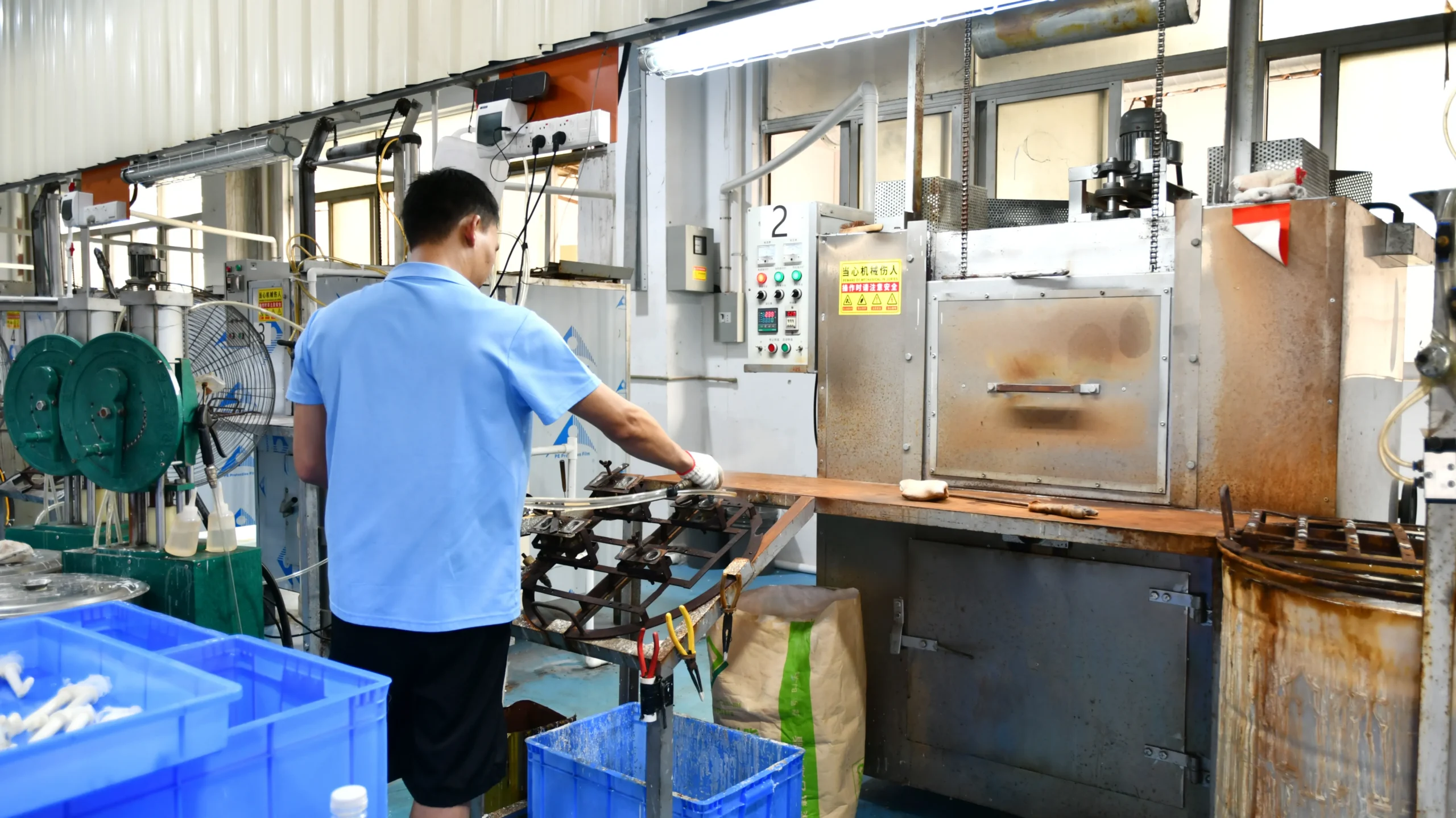
Vinyl rotocast manufacturing cannot realistically run one unit at a time. The workflow requires iron mold fabrication, vinyl paste injection, oven rotation, cooling and demolding. The rotary oven will not run for just one figure. The mold will not be custom-cut for one sample. Material waste, machine calibration and line purging costs still apply regardless of quantity.
Those “1-piece MOQ” listings are almost never true vinyl production. What you receive is usually a 3D-printed blank, hand-painted to look finished. It is not a vinyl figure. Material weight, hand feel, wall thickness consistency, surface texture and paint adhesion all differ. It may look similar, but it will not match the quality and characteristics of mass-produced vinyl goods. It is only a visual mockup.
This is not inherently deceptive, but misunderstanding is common. A 3D-printed piece works well as a prototype to verify shape, proportion and color direction. It is not finished sellable stock. To sell the item commercially, pass CE/EN71 testing and withstand drops and daily handling, you still need the full vinyl iron-mold production route.
The gap between “one piece” and “50 pieces” is not just 49 units. It is two entirely different production routes. One is a printed mockup. The other uses real tooling, rotocasting, spray and pad printing, plus formal QC.
Xingyi Toy sets the threshold at 50 because this is the minimum quantity where we can justify cutting a full iron mold and running the complete vinyl workflow. The finished goods use identical materials and processes as large-batch production, not printed prototypes. Orders smaller than 50 are still open for discussion, but we will state clearly: below 50 pieces, we follow the 3D printed prototyping route. That is great for visual reference, but not for finished retail products. For authentic rotocast vinyl figures, 50 is our entry point. If you only want to preview the look first, printed mockups are available as a separate option with separate pricing and lead time. We never mix these two services under one quote.
Do not be misled by “no minimum” claims. The value of our low MOQ program is not that you can buy a single unit. It is that you can commit to a reasonable initial investment and receive a genuine vinyl product made by standard production processes, rather than a polished display model.
After reviewing all of this, you will have a clearer sense of which path fits you. You can choose a 50-piece vinyl run or start with a printed mockup. There is no rush to decide. Send over your design files and target quantity, and we will share honest advice based on your project needs. We confirm feasibility openly and explain limitations when applicable, instead of overpromising with “one-piece” claims.
Every quotation breaks out mold fees, sampling fees and mass-production unit pricing separately. You see exactly how costs shift between 50-piece runs, 500-piece runs and future reorders. We reply within 2–3 working days. Pre-production samples are free for bulk orders (you only cover shipping). We complete CE/EN71 testing matching your target market requirements.
Xingyi Toy is a Shenzhen factory that has made custom vinyl figures for 12 years, with 2,000+ brands behind us. We specialize in low-MOQ OEM rotocast vinyl art toys and have built our small-batch workflow specifically to solve the high-minimum pain points most independent creators and small brands run into.
