Address
304 North Cardinal
St. Dorchester Center, MA 02124
Work Hours
Monday to Friday: 7AM - 7PM
Weekend: 10AM - 5PM
Address
304 North Cardinal
St. Dorchester Center, MA 02124
Work Hours
Monday to Friday: 7AM - 7PM
Weekend: 10AM - 5PM
Custom Figure Factory
Custom Figure Factory
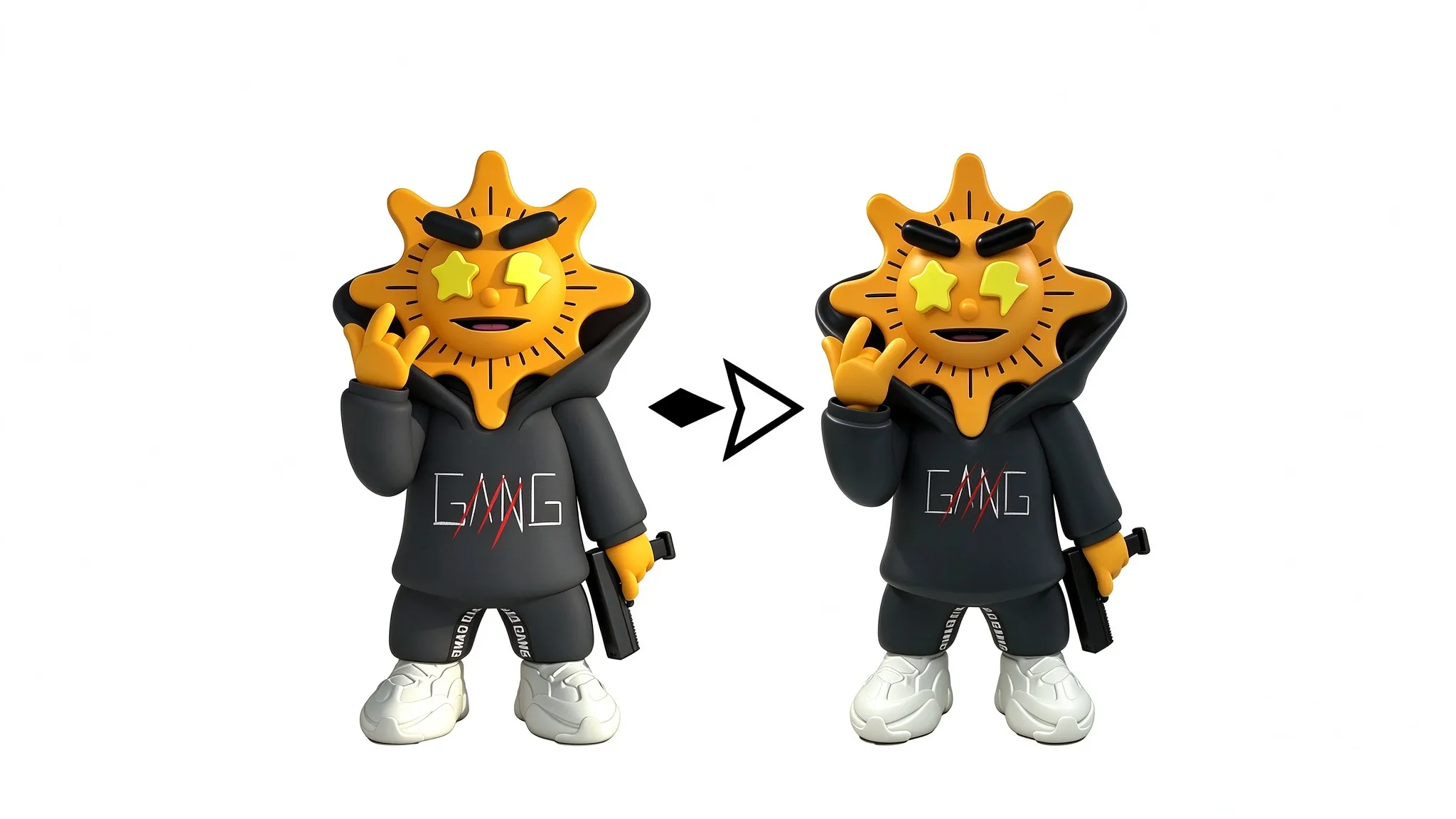
Custom vinyl figures follow an 8-stage production journey: design & 3D sculpting, prototype development, parting design & vinyl mold tooling, pre-production sampling, sample review & revision, mass production (rotocasting, sanding, spray painting, pad printing, assembly), quality control & packaging, and shipment.
Lead time typically runs 8–12 weeks from design approval to delivery. Timelines extend for intricate sculpts, multi-color paint schemes, or multiple rounds of sample adjustments. If you’ve ever wondered how vinyl figures come to life, this is our full shop-floor breakdown.
At Xingyi Toy, vinyl figure sculpting is far more than feeding a sketch into an AI tool and hitting generate.
We start with your concept, design sheet or reference images. Our skilled 3D artists build the character sculpt from scratch, strictly following your vision for proportions, facial expression and fine details.
If you supply a finished 3D file, we do not jump straight to tooling. We first run a safety & manufacturability check: soften sharp edges to meet global toy safety standards, thicken overly thin geometry and reinforce weak zones. This prevents finished figures from wobbling, bending or deforming with handling.
Every model update and revision is sent back for your sign-off. No work moves forward without your approval.
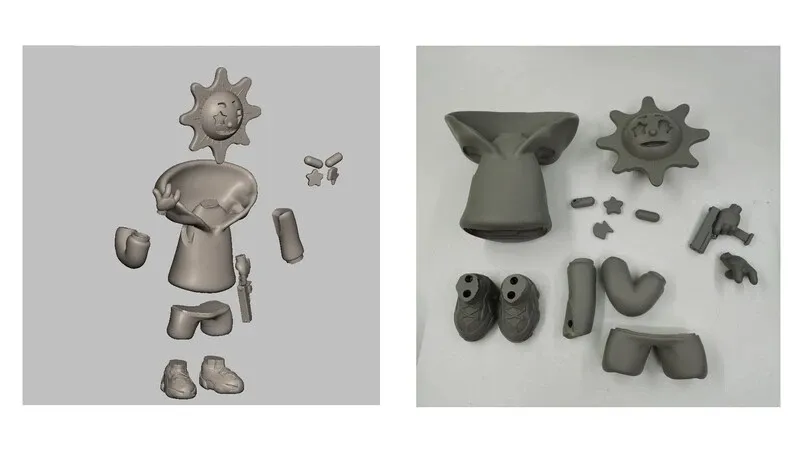
Once the design is locked, our parting engineer with 10+ years of experience takes over. Using FreeForm software, they split the sculpt per the tooling strategy: defining component splits, joint placement, paint routes and assembly sequence before any mold steel is cut. This upfront planning avoids costly rework during mold making, pre-samples and mass production.
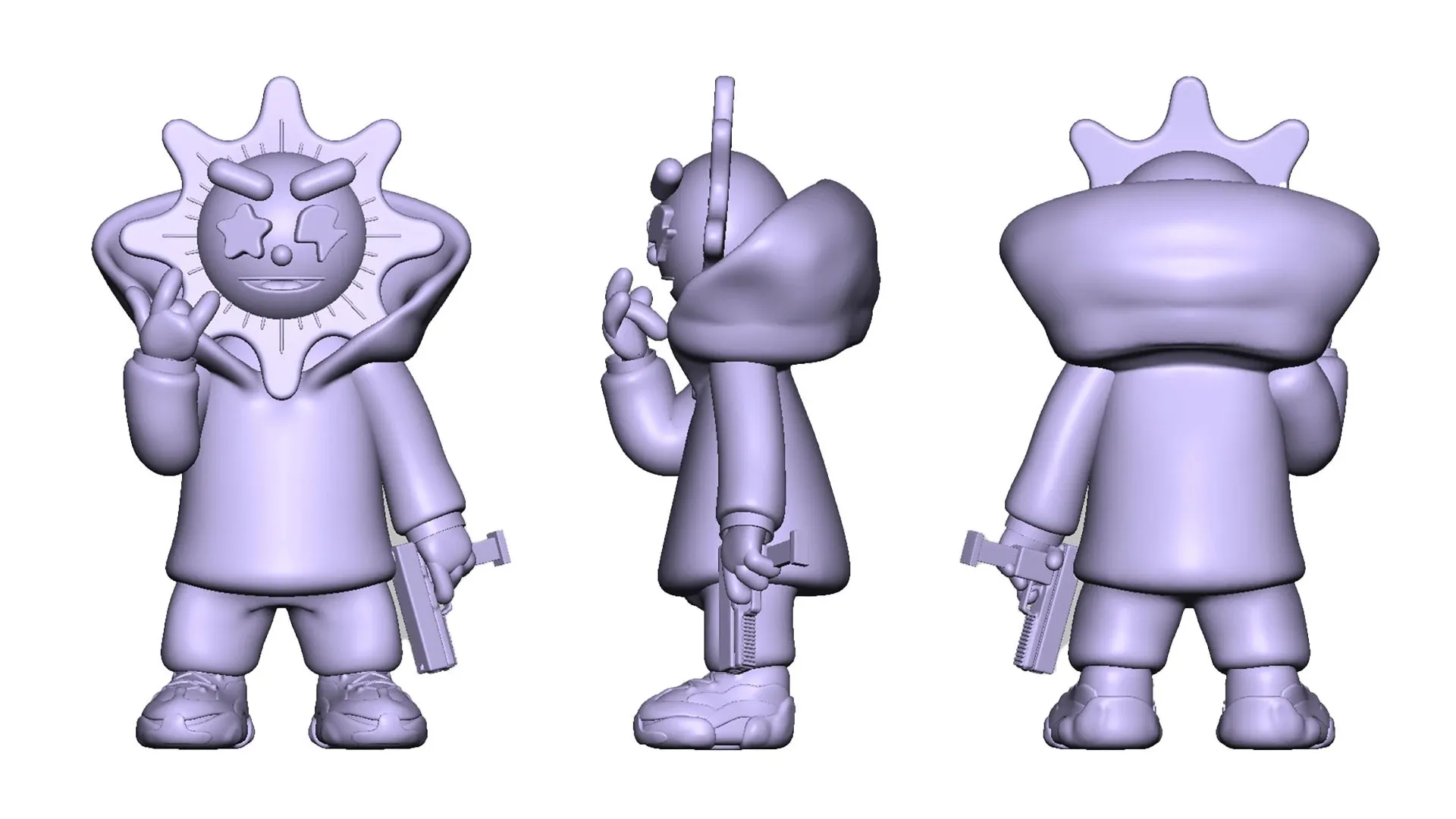
After 3D approval, tooling commences.
The character is broken into separate parts: head, torso, limbs and accessories. Based on your order volume and individual part size, we plan mold sets, part grouping and cavity count for each component.
Our standard setup is single-part molds with 4 cavities. For example, a dedicated head mold running 4-up rotocasting: four identical heads per cycle for higher throughput and lower per-unit mold amortization.
This is not a fixed rule. For smaller runs, we combine different parts in 1-up or 2-up molds to reduce your tooling investment. Extra-large or structurally complex parts get fewer cavities — otherwise layout becomes unworkable and molding consistency suffers.
We balance component grouping, cavity count, wall thickness requirements, paint access and assembly efficiency against your order size.
Before finalizing mold layout, we walk you through mold quantity, cavity arrangement and resulting unit pricing, as this plan directly impacts both tooling cost and unit price. We only cut iron molds once you confirm the plan.
Rotocasting and injection molding are two distinct manufacturing paths. Xingyi Toy specializes in rotocast vinyl production.
Rotocasting workflow in short: we mix PVC paste resin, stabilizers and color pastes to a precise formula. Mixing is critical. Incorrect ratios produce parts that are overly soft or brittle; uneven pigment leads to splotchy paint finishes later.
The prepared paste is poured into the closed iron mold, then loaded into an oven above 200°C. The mold rotates along dual axes, letting PVC paste coat the inner cavity evenly to form consistent wall thickness. Poor rotation or unstable temperature causes uneven walls, air bubbles and bare patches.
Once cooled and demolded, you get a hollow raw blank. Rotocast gates are soft, unlike the rigid sprues from injection molding. Our team manually trims, sands and deburrs gates, seam lines and flash — sloppy trimming ruins all downstream finishing.
Injection molding, by contrast, injects molten plastic into hardened steel molds under high pressure. It delivers solid or ribbed parts with tight dimensional tolerance and fast cycle times. However, tooling cost is high, and it only makes economic sense for very large orders. Hard sprues also require mechanical cutting and secondary machining.
Rotocasting shines with lower mold cost, lightweight hollow bodies and flexible small-to-medium batch runs for designer art toys. Injection molding excels at precision, fast cycles and cost efficiency for high-volume mass goods.
Painting and assembly are the finishing stages, and where hand craft makes all the difference.
Spray painting works one color per pass. Misaligned masking jigs or unsealed masking tape cause overspray. Automated systems cannot fully fix this. Our painters touch up defects with fine brushes, then recheck for color drift, paint bleed and runs.
For high-precision details such as eyes, we skip freehand spray work. We use pad printing or water-slide decals, layering sclera, iris and highlights for crisp registration and clean edges — far more consistent than hand painting.
Assembly is not simple gluing. We select eco-friendly adhesives matched to each structure, apply glue only to designated bonding surfaces, clamp seams firmly and wipe away excess to eliminate glue squeeze-out on visible areas.
For mushroom peg joints (head-to-body connections for example), forcing cold assembly cracks parts or creates loose fits. We gently warm the mating zone to soften vinyl, seat the joint while the material remains pliable, and let it lock as it cools for a tight, damage-free fit.
After assembly, every figure undergoes a standing stability test and center-of-gravity check before entering QC.
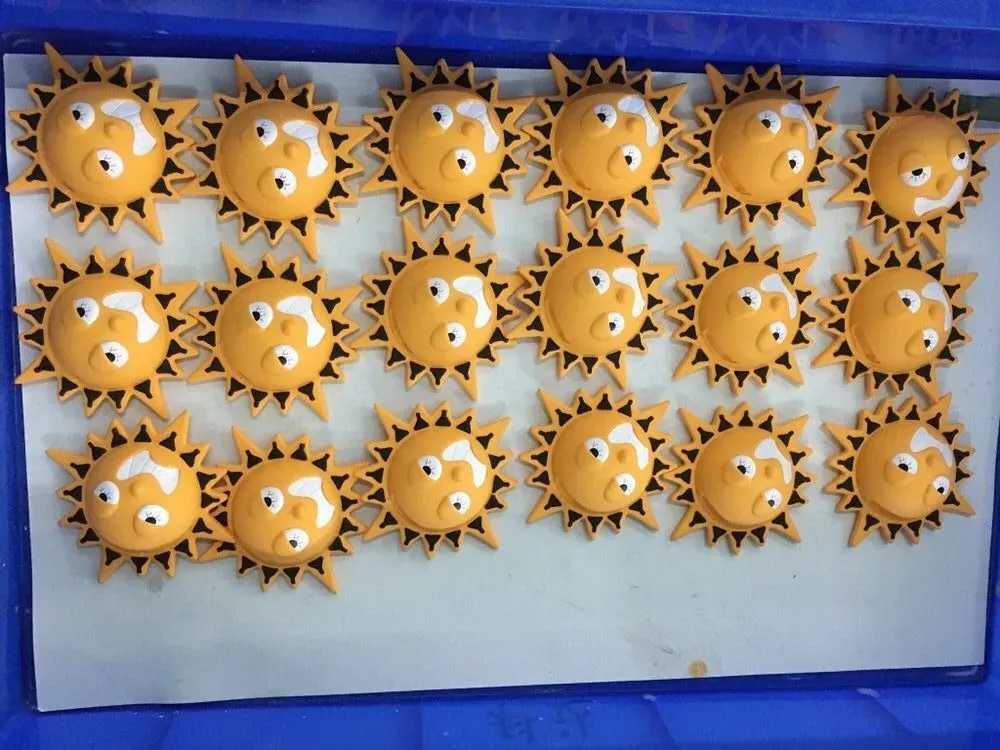
We inspect every single unit, not just random sampling.
Each finished vinyl figure is checked for residual flash, surface streaks and seam tolerance; paint overspray, bleeding and color mismatch; pad-printed eyes and logo alignment; assembly gaps and stability.
Defects follow two handling paths: minor fixable issues such as light overspray or small flash go back for touch-up, sanding or rework. Non-repairable defects, structural cracks, severe warping or any safety risk result in direct scrapping. Defective units never get packed to pad order counts.
Packaging runs on a segmented line for reliability: one station loads the main figure, another adds accessories, collector cards and desiccant, a third folds and seals boxes. A final check station cross-verifies all contents against the packing list to ensure no missing parts and correct quantities before outer cartons are sealed for shipment. This split workflow keeps packing fast and reduces omissions.
Xingyi Toy is a Shenzhen factory with 12 years of experience manufacturing custom vinyl figures. We have served over 2,000 brands globally.
We avoid opaque industry jargon and focus on real shop-floor realities: mold layout logic, overspray correction, why sample validation cannot be skipped.
We support OEM starting at 50 pieces. Our full service covers everything from 3D design through shipment, with CE and EN71 compliance prepared for your target market as part of the complete vinyl toy manufacturing process.
Your design sheet stays just an idea until it is produced. Send your artwork over, and we will advise manufacturability, process options and pricing.
We are transparent: if the design can be made, we confirm. If it is not feasible, we tell you honestly.
