Address
304 North Cardinal
St. Dorchester Center, MA 02124
Work Hours
Monday to Friday: 7AM - 7PM
Weekend: 10AM - 5PM
Address
304 North Cardinal
St. Dorchester Center, MA 02124
Work Hours
Monday to Friday: 7AM - 7PM
Weekend: 10AM - 5PM
Custom Figure Factory
Custom Figure Factory
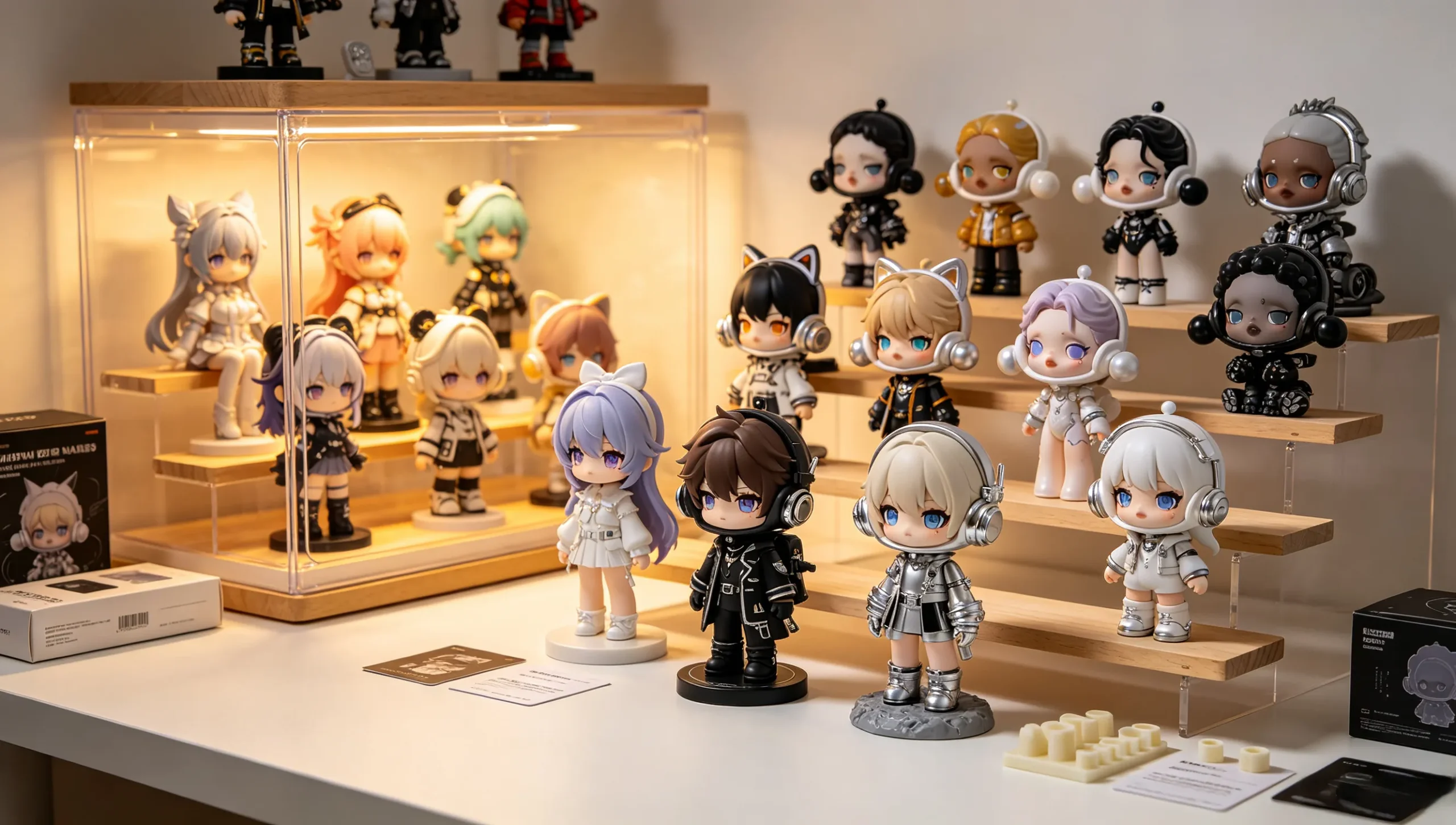
Common plastic materials for collectible figures include ABS, PP, PVC and resin. Plastic figures are human-shaped toys predominantly manufactured from plastics, featuring light weight, good durability and rich color performance.
Custom action figures are mostly produced from PVC (polyvinyl chloride) or TPR (thermoplastic rubber) via roto-casting or injection-molding processes. Popular as trendy designer toys (such as the Sonny Angel series) and licensed IP merchandise, these figures normally have smooth or subtle-matte surfaces, solid hardness, and good resistance against impact and deformation.
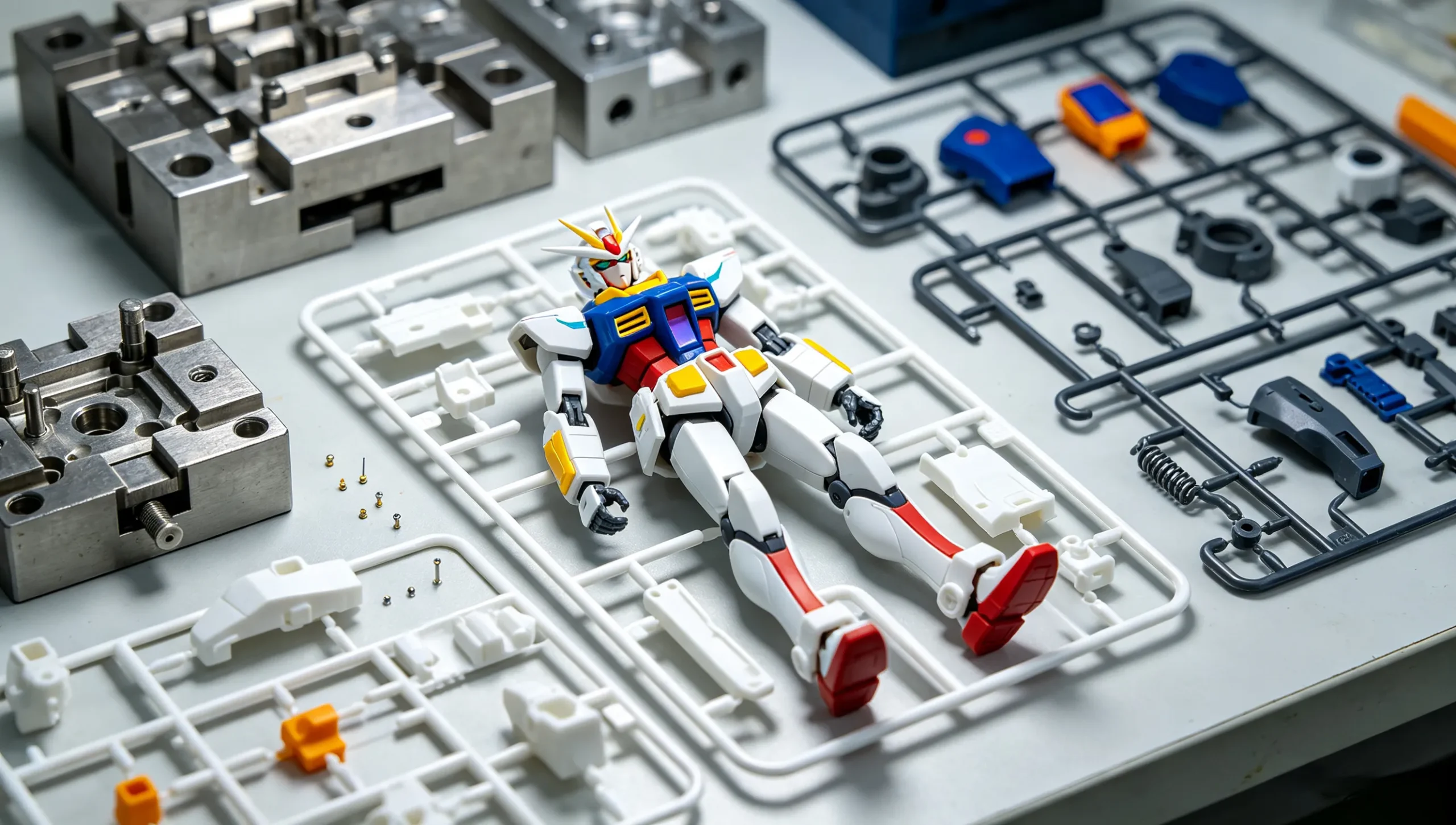
Injection-molded plastic action figures
Molten PVC or ABS material is injected into precision molds and cooled to form final shapes. This process enables cost-effective mass production. Surface finishes including painting, electroplating and UV printing deliver vivid colors and fine details. Such figures are extensively used for anime IP derivatives, art toys and kids’ merchandise.
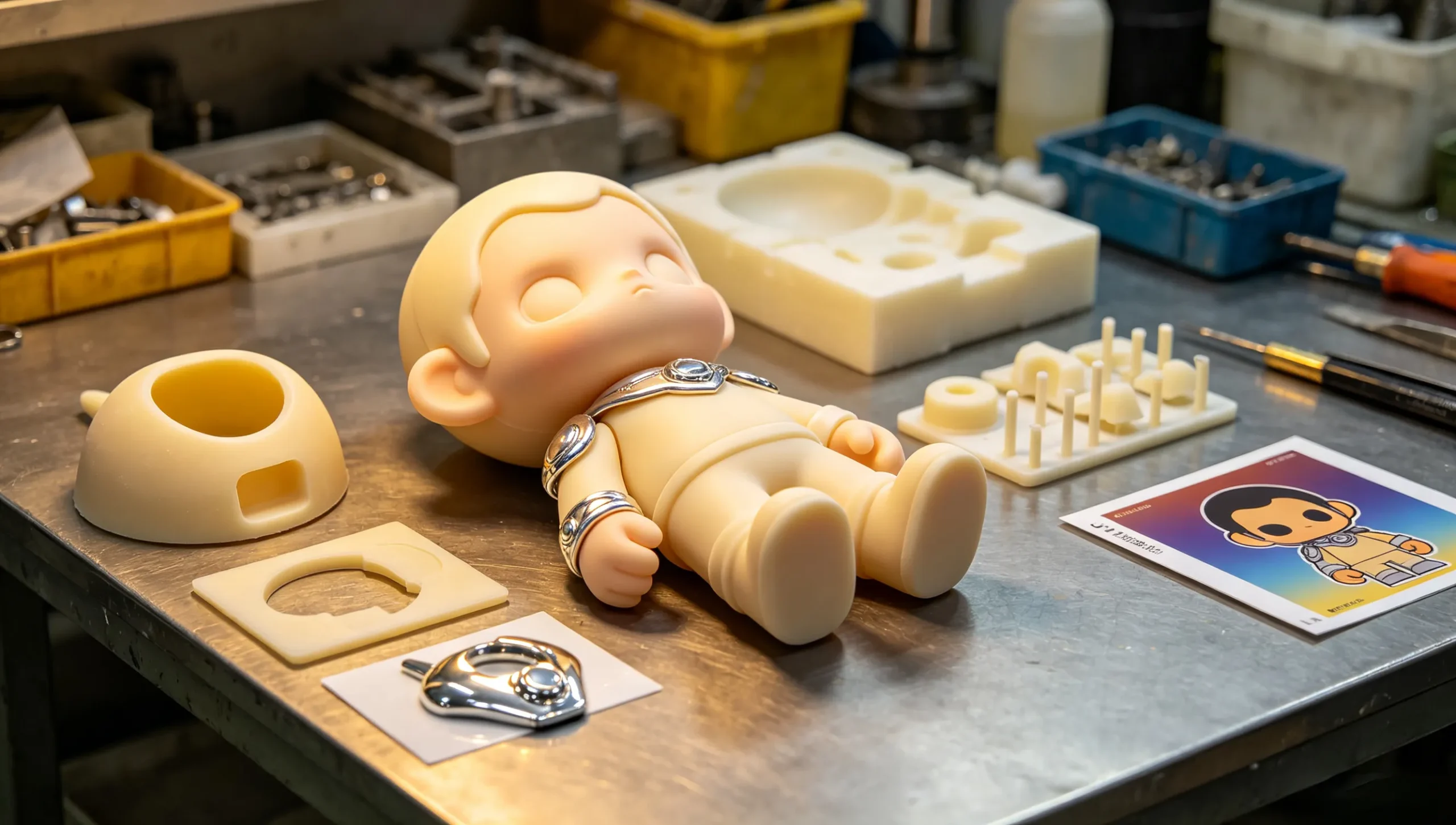
Roto-cast (vinyl) action figures
Roto-cast pieces use PVC or TPR raw materials; certain products combine roto-casting with injection molding workflows. Their texture sits between soft rubber and hard plastic, balancing flexibility and sturdiness. During manufacturing, materials are heated to 160-180 °C, processed inside molds and cooled to form hollow bodies. Post-treatments such as spray painting, UV printing and electroplating bring out sharp details and bright color effects.
Resin figurines
Fabricated from epoxy or PU resin, resin figurines belong to high-end collectible statues. Liquid resin is poured into high-definition molds for curing, followed by polishing and hand painting to capture ultra-fine details. Compared with ordinary plastics, resin delivers superior hardness and delicate surface quality, faithfully reproducing skin texture, garment folds and other subtle features — perfect for limited-edition anime and game character collectibles.
Resin figures mostly rely on hand-craft painting techniques: multi-layer spraying, panel lining and matte finishing create saturated, long-lasting color effects. They are heavier and carry higher unit costs yet own prominent artistic and collection value. Since resin material is brittle, internal structural reinforcement is often added to finished goods. Eco-friendly bio-based resin options are also available to lower environmental footprint. For storage, keep resin pieces out of direct sunlight to avoid color fading and place them inside dust-proof display cases for preservation.
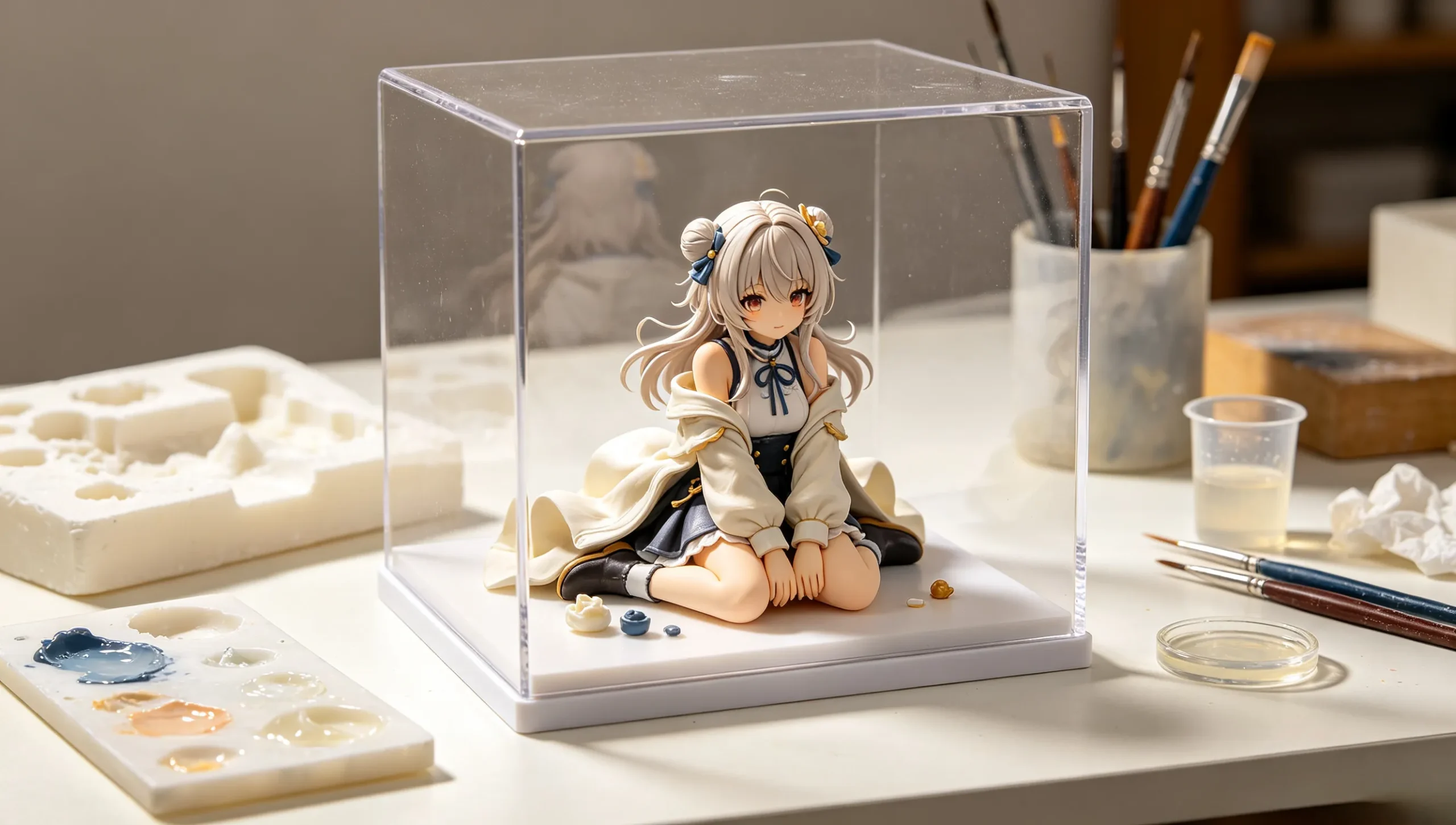
These figurine products are core items within art-toy lines, anime IP derivative ranges and themed character collections. When compared with plush toys, roto-cast figures offer better impact resistance, stronger deformation resistance and support for sophisticated sculpt designs. On the downside, they have a harder feel and tend to feel cold-to-touch in low-temperature environments. Thanks to low unit production costs and high manufacturing efficiency, roto-cast products cover broad market segments, ranging from budget-friendly blind-box series up to premium high-end collectibles.
