Address
304 North Cardinal
St. Dorchester Center, MA 02124
Work Hours
Monday to Friday: 7AM - 7PM
Weekend: 10AM - 5PM
Address
304 North Cardinal
St. Dorchester Center, MA 02124
Work Hours
Monday to Friday: 7AM - 7PM
Weekend: 10AM - 5PM
Custom Figure Factory
Custom Figure Factory
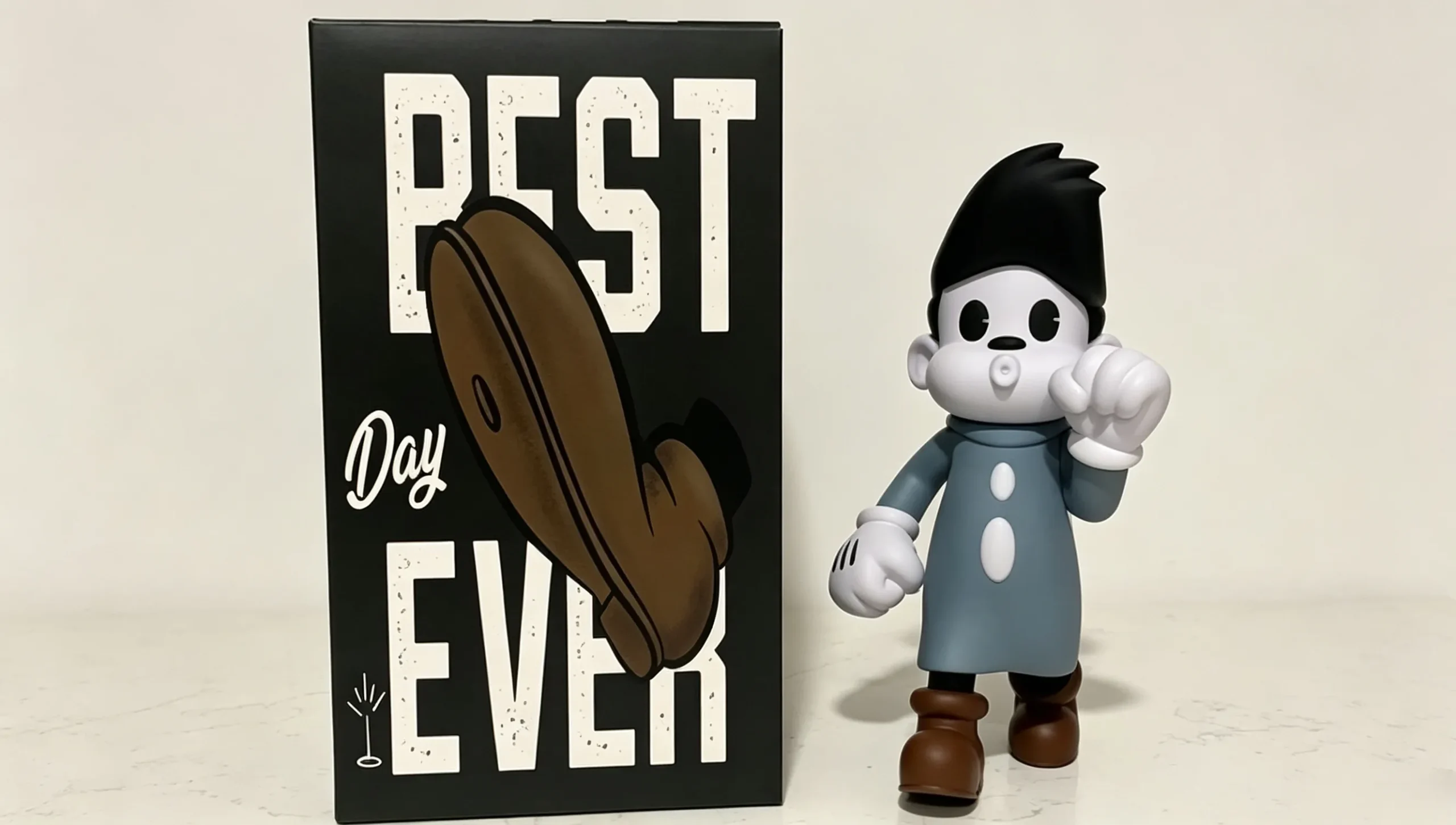
I get asked this question at least three times every week. Clients send over hand‑drawn sketches or finished 3D files and ask the same thing: how much will it cost to turn my idea into a physical toy?
My answer is always: it depends.
I know that is not what people want to hear. Everyone hopes for a simple fixed price. But after years in this industry, I can say for certain: anyone giving you a flat price up‑front either does not understand toy manufacturing, or will hit you with hidden extra fees later.
Below is a full breakdown of custom vinyl toy costs. No over‑hyped marketing, just real factory pricing and timelines. This is the practical guide I wish I had when I first got started.
Where Exactly Does Your Money Go?
These are all line‑items included in every quotation from Xingyi Toy, fully transparent with no hidden charges.
| Item | Cost |
|---|---|
| 3D Modelling | $100 – $500 |
| Pre‑production Sample (PP sample) | Free with bulk order, buyer covers shipping only |
| Rotocasting Iron Mould | $200 – $500 |
| Unit Production (100‑500 pcs) | $12 – 25+ USD per piece |
| Packaging | $1 – 5 USD per piece |
| Shipping Cost | Calculated based on fuel price & destination |
This is the high‑level overview. The following deep‑dive will help you avoid unexpected extra expenses during production.
Design & 3D Modelling Costs
Every custom toy starts with design. Even great hand‑drawn art will go through revisions. Many clients go through multiple rounds of changes, sometimes more than ten rounds, before moving to manufacturing. This is normal in toy development.
If you hire a freelance artist for 2D concept art, typical costs range from $500‑3000. Price depends on artist experience and character complexity. Simple stylized figures cost less; characters with complex layered parts, mechanical details take more working hours and cost more.
Once 2D artwork is approved, we move to 3D modelling. Our modelling fee runs $100‑500. Simple characters sit at the lower end, highly detailed complex figures land at the higher end.
Important note: any design revision after 3D work starts will generate extra charges. Lock your design early to stay within budget. I have seen projects burn through most of their budget purely on repeated design edits.
Three Main Manufacturing Options & Their Cost Differences
There are three mainstream production methods for custom collectible toys, each suited for different order sizes, detail requirements and budgets.
1. Rotocasting (Vinyl / Rotocast, our recommended process)
The classic process for designer urban vinyl toys. Produces hollow, lightweight, soft‑touch collectible figures.
2. PVC Injection Moulding
Best for large‑scale mass production starting from 1000 units. Uses precision CNC steel moulds with very high detail, but mould investment is expensive at $3000‑10000+. Once the mould is finished, per‑unit cost drops significantly.
3. Resin Casting
Suitable for small‑run art projects of 50‑500 pieces with ultra‑fine details. Silicone mould cost $200‑800, but casting is mostly hand‑work so per‑piece labour cost is high.
Process Comparison Table
| Manufacturing Process | Best For | Unit Price @500pcs | Mould Cost | Production Lead Time |
|---|---|---|---|---|
| Rotocasting Vinyl | 100‑5000 pcs | $15‑28 | $200‑500 | 1‑2 weeks |
| PVC Injection | 1000 pcs+ | $12‑22 | $3000‑10000+ | 20‑30 days |
| Resin Casting | 50‑500 pcs | $25‑40 | $200‑800 | 10‑15 days |
For independent artists, small studios and first‑time buyers, rotocasting vinyl is usually the best solution. It balances quality, low mould investment and flexible batch sizes for runs of 100‑500 units.
Core Cost: Rotocast Iron Mould
Many clients get confused about mould types. Injection uses steel moulds, resin uses silicone moulds, and our rotocast vinyl toys use iron moulds.
Mould creation starts with wax master (red wax is preferred). Red wax delivers sharper details and smoother surface finish; white wax costs less but with lower surface quality. After wax master confirmation, we cast it into the final iron mould.
Lead‑time for full iron mould: 1‑2 weeks, cost $200‑500 based on figure complexity.
Maintenance reminder: Iron moulds rust easily under moisture. Rust will ruin surface finish and destroy your mould. Proper drying and oil maintenance extends mould life. Even if damaged, replacement cost stays low. Rotocasting does not require expensive CNC steel moulds; wax‑cast iron mould is proven industry standard, faster and cost‑effective for vinyl toy production.
Do Not Skip: Pre‑production PP Sample
I cannot stress this enough: never skip pre‑production sampling to save money. Some clients want to jump straight to mass production without samples, and almost always regret it with costly rework.
Sampling eliminates mass‑production risk, covering these five key stages:
1. 3D Part Split & Structure Optimization
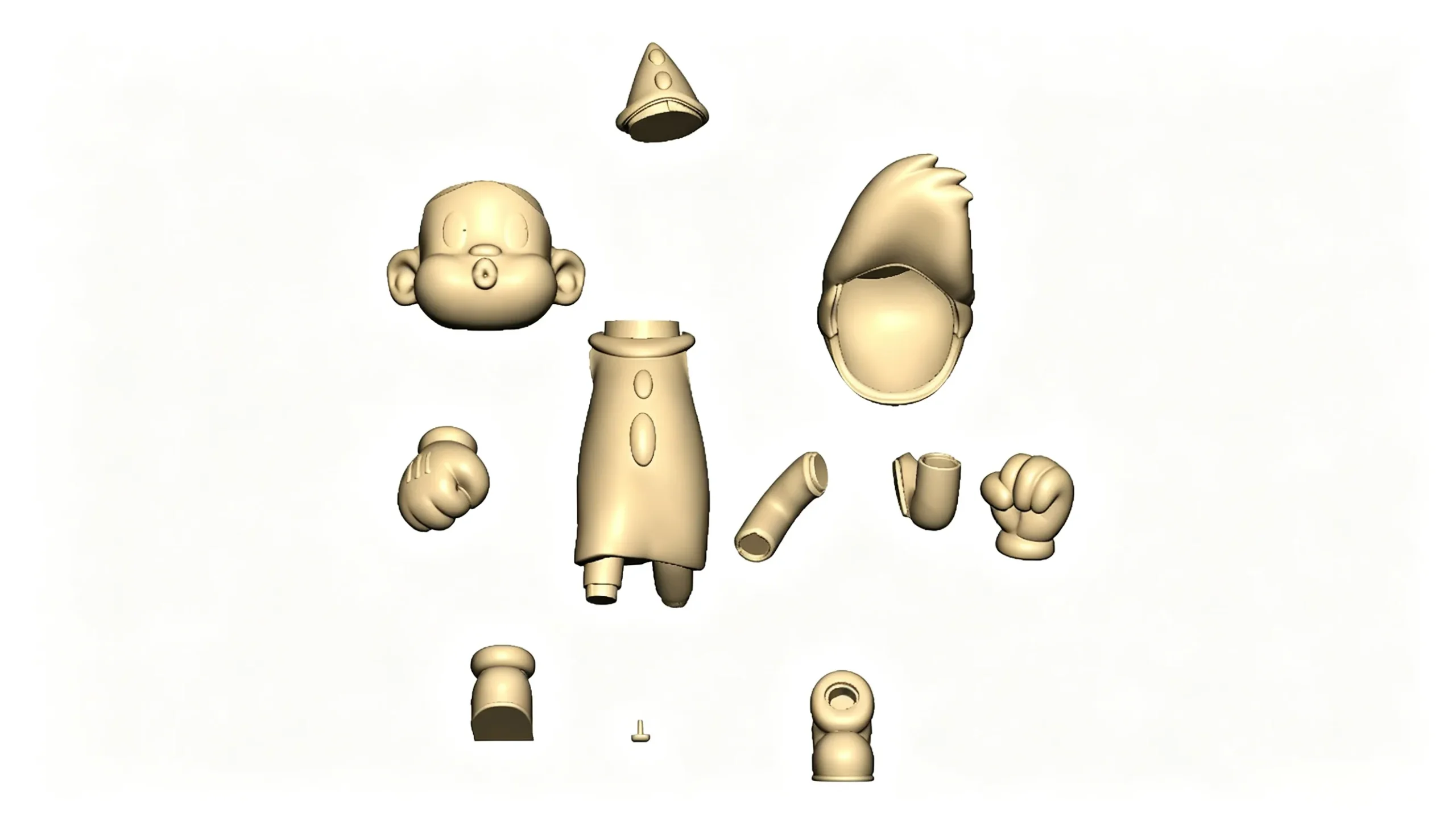
We split the full 3D model into separate parts: head, body, limbs, base and accessories. Adjust assembly tolerance to make parts fit correctly. We also define paint boundaries and pad‑print areas. Good part‑splitting prevents most structural defects. Changing structure after mould completion costs far more.
2. First Mould Test Pull
Blank raw vinyl parts come out from your iron mould. This is your design in real vinyl material (different from 3D print / resin prototype). Vinyl has material shrinkage rate; we adjust proportions at this stage to avoid mass‑production mistakes.
3. High‑Temperature Bake Test
Assembled raw figures go through heat testing to check for warping, cracking or twisting. We also test balance and standing stability to fix tipping issues before bulk run.
4. Hand‑painted Finished Prototype
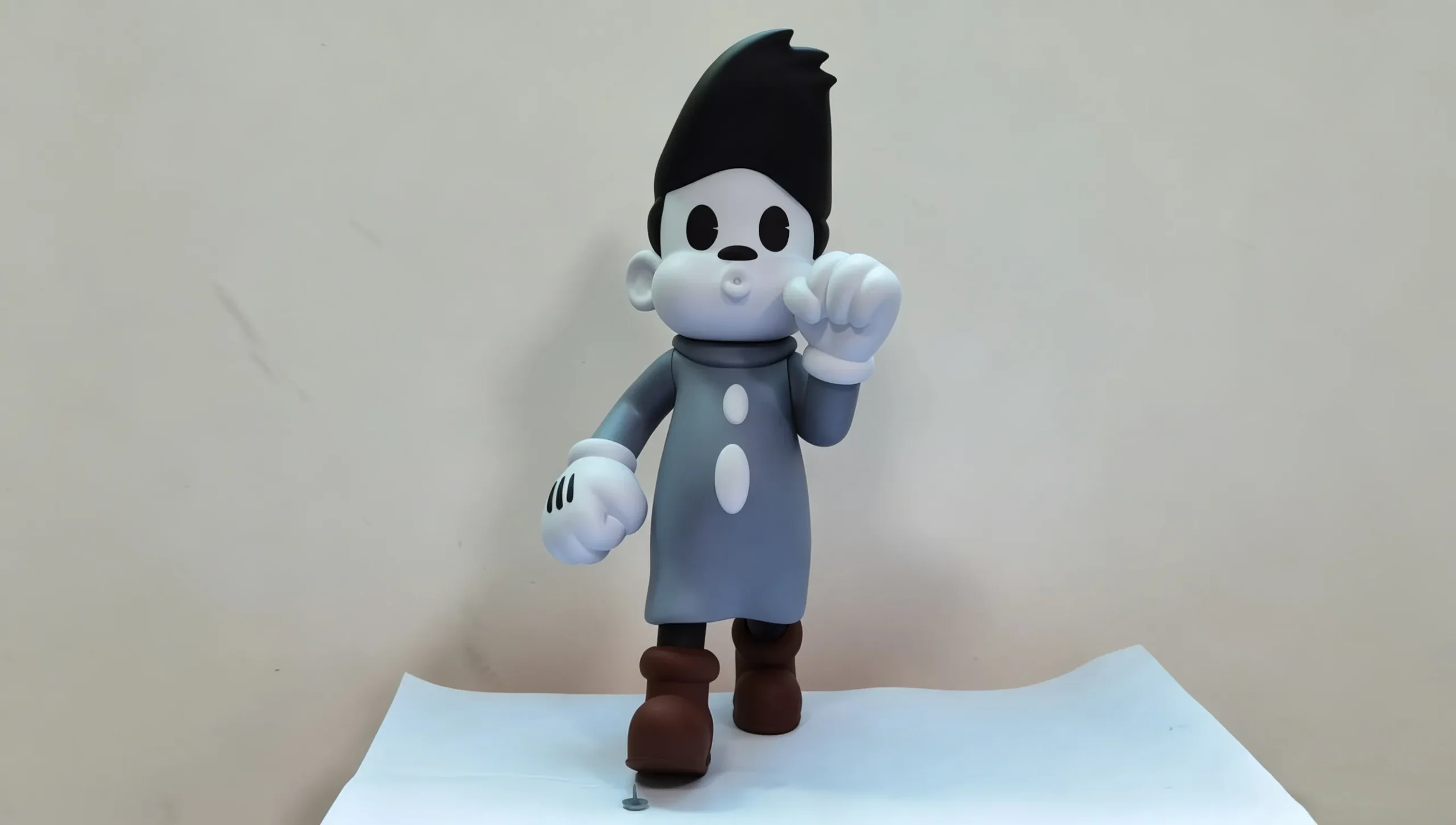
Artists hand‑mix colours and paint the figure following your reference. We check surface quality, paint adhesion, colour bleeding and over‑spray to match your design expectation.
5. Finalize Mass‑Production Painting Workflow
Confirm production‑ready painting workflow: large colour blocks use masked spray painting. Tiny details like eyes and logos apply pad printing. Complex visuals need multiple stacked print layers, which directly affect production time and cost.
Sample Final Approval
You receive the finished painted sample for review, either approve or submit revision notes. PP sample is free with bulk order, you only pay sample shipping. Multiple re‑sampling due to repeated edits will incur extra sampling fees per industry standard.
Full Project Lead Time
Quality custom toys cannot be rushed. Below are realistic standard timelines:
| Phase | Lead Time |
|---|---|
| Concept & 3D Modelling | 2‑4 weeks |
| Part‑split & Prototype Work | 2‑3 weeks |
| Iron Mould Fabrication | 1‑2 weeks |
| Pre‑production Sample Build | 2‑4 weeks |
| Sample Revisions & Final Sign‑off | 1‑3 weeks |
| Mass Production | 4‑8 weeks |
| QC & Packaging | 1‑2 weeks |
| International Shipping | 1‑4 weeks |
Total typical project timeline: 3‑5 months
You cannot expect finished custom vinyl toys within 2 months. Forcing rush jobs introduces defects. Fixing defective finished goods costs more than building slowly in the first place.
Quantity‑Based Unit Pricing
Toy manufacturing follows volume economics: higher order quantity equals lower per‑unit cost. Real‑world rotocast vinyl unit pricing:
| Order Qty | Unit Production Cost |
|---|---|
| 100 pcs | $25‑40 |
| 500 pcs | $15‑28 |
| 1000 pcs | $10‑20 |
| 5000 pcs+ | $8‑15 |
For small‑to‑medium runs of 100‑500 pieces, total project cost including design, modelling, mould, production and packaging normally sits at $5000‑15000. It is a realistic entry point for independent artists and small teams to launch professional custom toys without huge capital.
Hidden Cost: Manual Labour Workflows
Many buyers overlook labour cost, which is critical for high‑end custom toys. Vinyl toy production cannot be fully automated. Even for large orders, a small defect rate means hundreds of pieces need hand touch‑ups, trimming and reassembly.
Every finished figure goes through these manual‑only steps:
No machine can fully replace skilled manual work, and labour cost is unavoidable for good‑quality collectible toys.
Packaging & Shipping Expenses
Packaging and logistics are unavoidable variable costs. Global fuel prices keep pushing international freight higher. Shipping usually accounts for 5%‑15% of total project cost.
Custom packaging adds to your budget. Premium printed window boxes with custom inner trays and logo printing cost $1‑5 per unit. I suggest not cutting corners on packaging — packaging shapes buyers’ first impression, cheap boxes downgrade the perceived value of your art toy.
Real‑World Total Cost For Custom Vinyl Toys
Reputable factories will never quote one‑size‑fits‑all fixed prices. Flat‑rate offers are misleading marketing.
If you need an accurate personalised quotation, send your concept art or 3D files, and we return detailed itemized quotes within 2‑3 working days.
First‑Time Buyer Tips To Stay On Budget
Real‑world advice to avoid common pitfalls:
Start Your Custom Toy Project
Making custom vinyl toys involves many detailed steps. But seeing your original concept turn into physical collectible figures makes all the work worthwhile.
If you already have concept artwork or 3D files, send over your project brief. We will provide transparent itemized quotations, clear scheduling and full‑cycle manufacturing support to bring your custom art toy to reality.
