Address
304 North Cardinal
St. Dorchester Center, MA 02124
Work Hours
Monday to Friday: 7AM - 7PM
Weekend: 10AM - 5PM
Address
304 North Cardinal
St. Dorchester Center, MA 02124
Work Hours
Monday to Friday: 7AM - 7PM
Weekend: 10AM - 5PM
Custom Figure Factory
Custom Figure Factory
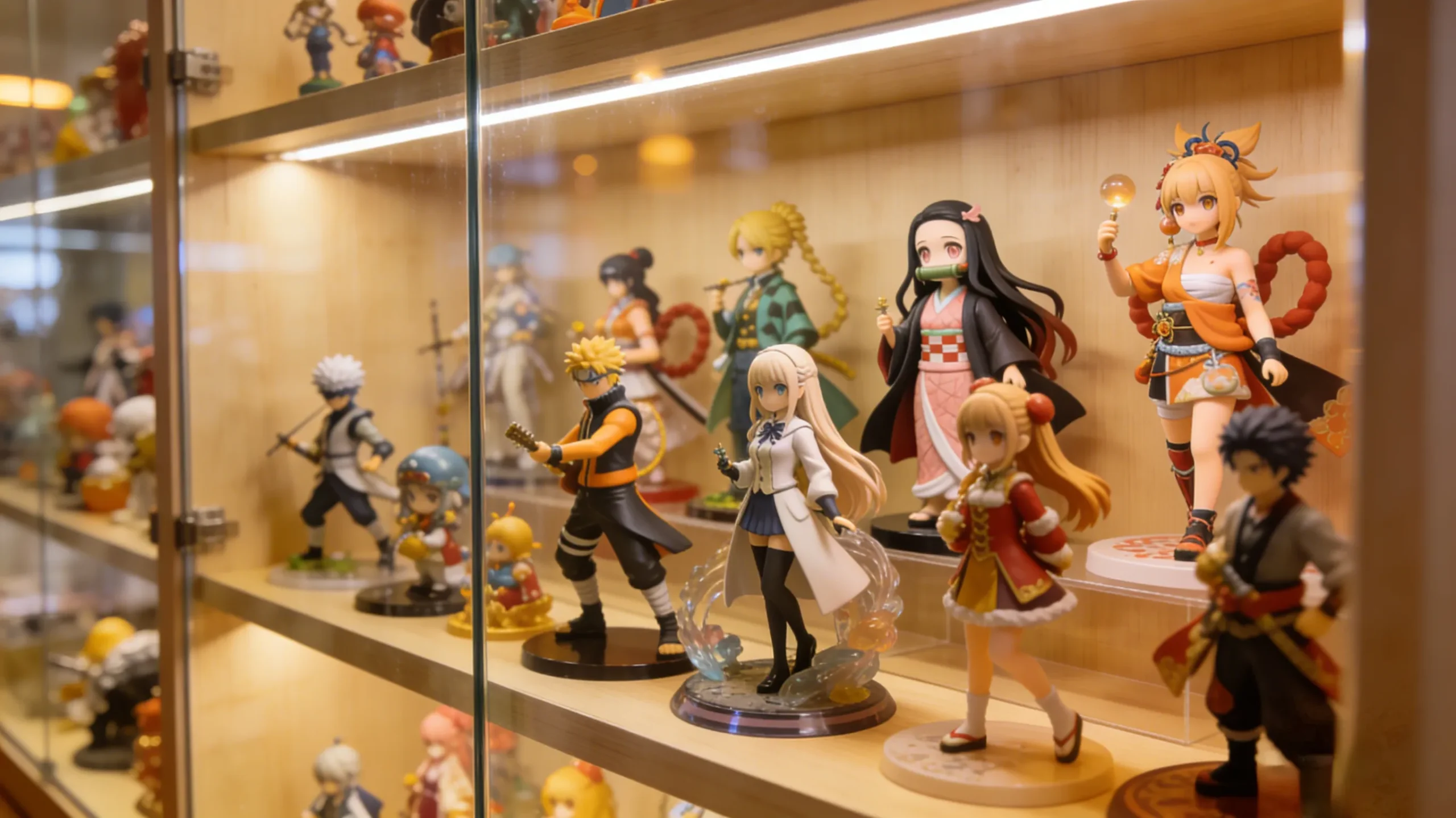
“Handicraft,” a magical term, originally referred to any model of a human or other object. However, with the growing popularity of anime culture, the term has gradually come to specifically refer to character models based on ACG (Anime, Comics, and Games) characters — in other words, anime figures.
So how are anime figures made?
The production of anime figures generally involves four processes: prototype development, mold making, painting, and packaging/shipping. Prototype development is the most time-consuming and crucial step, directly impacting the quality of the final product. The gray model (GK) after prototype development is completed is what we commonly see at anime conventions.
The prototype development process is completed by a sculptor. The sculptor’s main task is to sculpt the two-dimensional anime character using materials such as sculpting clay, AB clay, putty, and super light clay into a three-dimensional model (GK), based on the character’s parameters. Simply put, it’s “sculpting a little figure” for the anime figures. The prototype sculptor first shapes the basic outline and form of the anime character from the material. Then, they meticulously refine the details, such as the character’s expression, movements, and clothing. During this process, it’s crucial to pay attention to the coordination of the figure’s limbs and the accurate reproduction of its expression; otherwise, the anime figure will lack its spirit and fail to capture people’s interest.
After the prototype is completed, it undergoes several rounds of sanding, cleaning, painting, and repair (usually using gray paint to identify and repair small holes, resulting in a “gray mold”). Finally, it is disassembled into different parts to facilitate production.
Taking PVC anime figures as an example, after the prototype is developed, it needs to be cast. This involves customizing a mold based on the disassembled prototype. Only with a mold can mass production begin; otherwise, relying solely on handmade anime figures cannot meet market demand and is extremely expensive.
Figure molds are generally divided into two types: PVC molds and steel molds. Because the mold-making process corrodes the prototype, the prototype is essentially unusable after the mold is made. Therefore, the choice of mold must be extremely careful. If PVC molds are used for casting, each unmolding causes some damage to the mold, so it’s essentially unusable after about 10 uses. While steel molds can be repeatedly used to produce a large number of finished anime figures, their high cost makes it difficult to recoup the investment unless mass production is involved.
After casting, many parts for the anime figure are produced. Each part needs to be sanded, especially those made with steel molds, which often have a noticeable mold line that needs to be manually removed to maintain the appearance of the finished product. After sanding, the parts are painted. Larger areas with simple colors are generally machine-painted, while more complex colors and details require manual finishing.
After painting, the parts are assembled, and a beautiful anime figure is complete!
Figure packaging generally consists of inner and outer packaging. Inner packaging typically uses foam or PVC molded boxes, primarily for securing and protecting the anime figure from damage during transport. The outer packaging is usually in the form of a color box, which will clearly indicate the various parameters of the figure, and there will be a hole in the middle so that consumers can see the details of the anime figure without opening the packaging.
