Address
304 North Cardinal
St. Dorchester Center, MA 02124
Work Hours
Monday to Friday: 7AM - 7PM
Weekend: 10AM - 5PM
Address
304 North Cardinal
St. Dorchester Center, MA 02124
Work Hours
Monday to Friday: 7AM - 7PM
Weekend: 10AM - 5PM

Custom Figure Factory
Custom Figure Factory
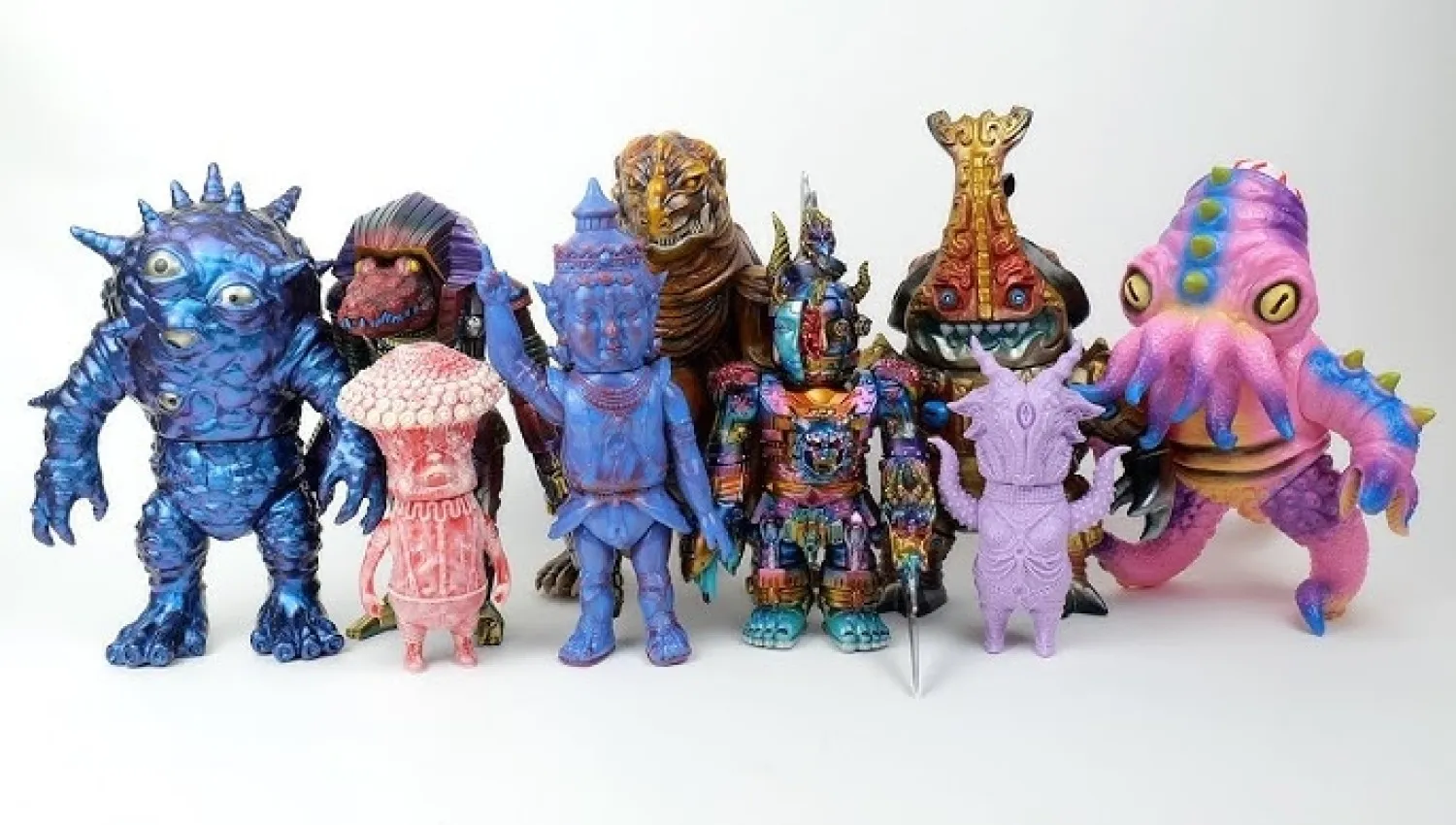
Sofubi (also often written as Sofvi) originates from the Japanese abbreviation of “Soft Vinyl”. It specifically refers to handcrafted, limited-edition soft hollow vinyl art toys originating from Japan. More than just ordinary vinyl figures, they are collectible works of art that blend tokusatsu culture, street fashion, and handcrafted craftsmanship.
Sofubi typically uses high-quality colored PVC as its raw material, allowing for the creation of special effects such as transparency, glow-in-the-darkness, and glitter. Themes often revolve around monsters, tokusatsu heroes, Japanese yokai (supernatural beings), lucky cats, and various original fantasy characters. Unlike mass-produced toys, authentic Sofubi are mostly produced in limited quantities by small Japanese family workshops or independent artists. Production is scarce, and the toys are hand-painted, targeting adult collectors rather than children.
This style originated in Japan in the 1950s. Due to its low cost and high safety, it gradually replaced wood, tin, and flammable celluloid as the mainstream material for toys. Riding the wave of tokusatsu (special effects) films like Godzilla and Ultraman in the 1960s, soft vinyl monster toys became wildly popular. Their popularity waned in the 1970s, only to surge again in the 1980s due to a nostalgic collecting trend. In the 1990s, driven by Harajuku streetwear brands, Sofubi officially transformed into designer art toys, gaining global recognition under the influence of Western and Hong Kong streetwear culture.
Sofubi toys face unique manufacturing limitations: they cannot have suspended structures, so they often employ separate designs for the head, body, and limbs to achieve complex shapes. The toys are mostly hand-painted in sections, preserving the base color texture. Combined with the small-batch production and long-term order system in Japanese workshops, this makes them highly collectible.
Today, Sofubi has developed into a unique subculture, drawing inspiration from horror comics, graffiti, tattoos, and superflat art, and frequently appearing at global exhibitions. Female artists, family workshops, and overseas creators collectively constitute this community. Due to their scarcity, some models are considered investment items and are subject to resale; artists also tend to sell their work to genuine collectors. Meanwhile, “Made in Japan” is a crucial criterion for seasoned collectors; similar toys made in other regions are often not recognized by the mainstream Sofubi culture.
Simply put, Sofubi is more than just toys; it’s soft vinyl art imbued with the warmth of handcrafting, carrying the essence of Japanese pop culture, and belonging exclusively to collectors.
