Address
304 North Cardinal
St. Dorchester Center, MA 02124
Work Hours
Monday to Friday: 7AM - 7PM
Weekend: 10AM - 5PM
Address
304 North Cardinal
St. Dorchester Center, MA 02124
Work Hours
Monday to Friday: 7AM - 7PM
Weekend: 10AM - 5PM

Custom Figure Factory
Custom Figure Factory
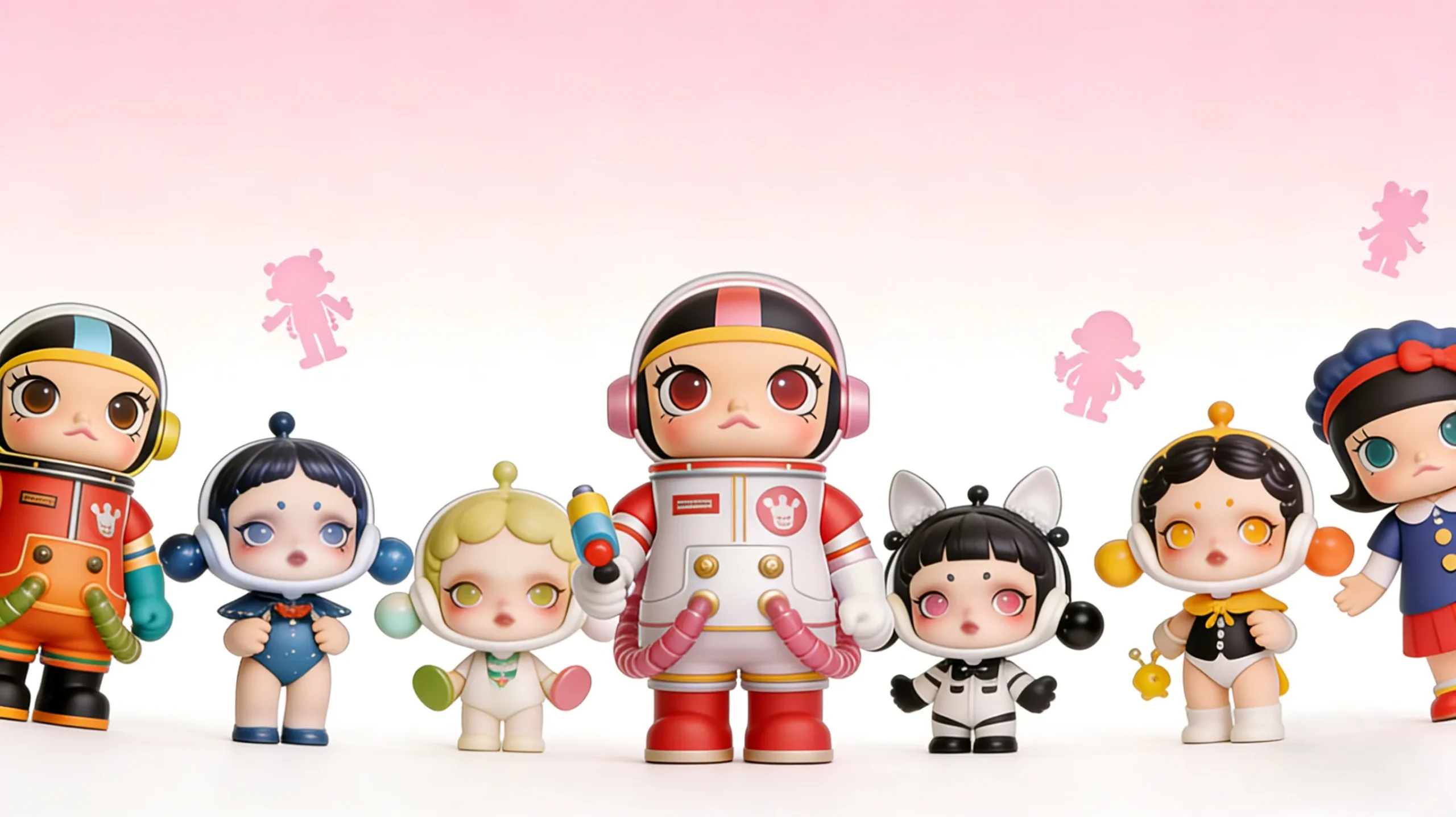
Art toys, also known as designer toys or trendy toys, are a creative cultural product originating in Hong Kong in the late 20th century. Created by designers or artists using materials such as vinyl, they are three-dimensional works that combine artistry and collectible value, blurring the lines between toys, fashion, and art from their inception.
This category officially emerged in 1999. At that time, the toy industries in Japan and the United States were generally sluggish, creating a development opportunity for Hong Kong’s toy industry. Michael Lau, a designer who had previously worked in an advertising agency, held a solo exhibition at the Hong Kong Arts Centre, creating 6-inch vinyl toys based on street-style figures from his paintings, which garnered widespread attention. That same year, designer Eric So launched 24 fashion-themed Bruce Lee action figures; both works quickly ignited a trend, sparking a global vinyl figure craze overnight, and were hailed in the West as “unconventional sculptures.”
Since then, art toys have gradually formed two main directions: one is designer toys from Europe and America characterized by independent creation, and the other is commercialized trendy toys represented by Japanese brands like Be@rbrick.
Unlike traditional cartoon toys and plush toys, the core of art toys lies in their deep integration with artistic creation. Artists can not only recreate the characters in their own works in three dimensions, but also freely develop basic toy models, imbuing originally storyless, expressionless, and themeless shapes with new concepts and ideological connotations. Furthermore, art toys are mostly produced in limited editions rather than in large-scale mass production, making them scarce and thus commanding prices far higher than ordinary toys, making them luxury items with a strong collectible value.
It is precisely because of this combination of art and scarcity that the market value of art toys continues to rise, with many works achieving significant price increases at auctions. In 2007, Japanese artist Yoshitomo Nara released a limited edition of 300 “Sleepless Night Sleeping” figures, priced at $1,000. Six months later, they sold for nearly $20,000 at a Sotheby’s auction in Paris, a premium of almost 20 times. Related art toy works by Takashi Murakami have even set a record of over $560,000.
Today, numerous renowned artists, designers, and graffiti masters worldwide are dedicating themselves to creating art toys, including Gary Baseman and Futura from the United States, Takashi Murakami and Yoshitomo Nara from Japan, James Jarvis from the United Kingdom, and Michael Lau and the Iron Brothers from Hong Kong, China. Michael Lau even proposed the concept of ARTOY, further emphasizing the fusion of art and toys. Although the economic benefits of art toys are far less than those of paintings for artists, the joy of transforming two-dimensional images into 3D works of art keeps them going. As American graffiti artist Ron English said, the spiritual satisfaction brought by art toys far outweighs monetary gains.
Many industry insiders believe that art toys are no longer just toys in the ordinary sense, but true works of art. In recent years, China’s trendy toy industry has also risen rapidly on the global stage. Brands like Pop Mart have incubated well-known IPs such as Labubu through designer support programs. This character blends Norse mythology and Eastern aesthetics, and has gained global popularity with its blind box model and healing design. Since the inception of the International Toy Show (BTS) in 2017, the scale of the exhibition has continued to expand, also driving the steady development of China’s art toy market. Overall, art toys are cross-disciplinary works that originated on the streets, grew in the art world, and became popular worldwide. They use toys as a medium and art as their soul, and have long been a unique and important category in contemporary creative culture.
